

China Wholesale Outdoor Lighting Procurement for Hanoi: Engineering Standards, Environmental Adaptation, and Supply Chain Optimization
As the administrative, cultural, and rapidly expanding economic nexus of Northern Vietnam, Hanoi presents a unique landscape for architectural design, municipal infrastructure, and commercial property development. With the implementation of the Hanoi Master Plan 2030 (Vision 2050), the city is undergoing an aggressive urban transformation—spanning modern high-rise corridors in Cau Giay and Nam Tu Liem, luxury waterfront hospitality developments around Tay Ho (West Lake), and heritage conservation lighting within the historic Hoan Kiem (Old Quarter) district.
However, sourcing outdoor and architectural lighting fixtures for Hanoi demands a rigorous technical approach. The regional climate, characterized by a harsh tropical humid monsoonal environment, extreme summer heat index peaks above 40°C, high atmospheric humidity averaging 80–85% year-round, torrential rainfall during the monsoon season, and localized urban flooding, rapidly degrades inferior electrical equipment. For B2B buyers, electrical contractors, municipality developers, and interior design firms in Vietnam, establishing a direct OEM/ODM wholesale partnership with an advanced China wholesale outdoor lighting manufacturer and factory is the most strategic path to achieving superior build quality, regulatory compliance, and cost efficiency.
Information Gain Insight for Vietnam Importers: Procuring directly from established Chinese OEM factories allows Hanoi engineering teams to customize structural alloy composition, silicone potting grades, optical diffusion lenses, and surge protection devices (SPD) specifically calibrated for Northern Vietnam's 220V/50Hz grid dynamics and humid microclimates.
1. Environmental & Microclimate Stress Factors in Hanoi Outdoor Lighting Projects
Standard indoor or dry-rated lighting fixtures fail prematurely when subjected to Hanoi's outdoor environment. To ensure long-term operational integrity without degradation of luminous flux or driver burnout, engineered fixtures must solve four primary environmental vulnerabilities:
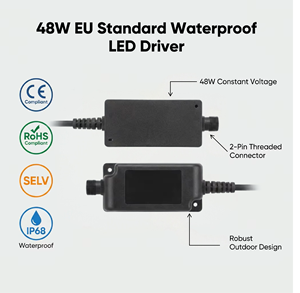
- Moisture Ingress & Condensation Cycling: Severe ambient humidity combined with rapid temperature drops between daytime heat and nighttime rains creates micro-vacuum forces that pull moisture into fixture housings. High-grade double-nested silicone gaskets, IP67/IP68 breathing valves (ePTFE membranes), and IP68 potted LED drivers (such as our professional 48W waterproof drivers) are mandatory to eliminate internal lens fogging and circuit corrosion.
- Salt-Spray, Acid Rain & Sulfur Atmospheric Exposure: Urban expansion in Hanoi's industrial peripheries produces localized sulfur dioxide and airborne atmospheric pollutants. Factory-applied multi-layer fluorocarbon electrostatic powder coatings (exceeding 1,000 hours of ASTM B117 salt spray testing) prevent pitting corrosion on aluminum alloy housings and stainless-steel mounting sconces.
- Thermal Management under High Ambient Temps: Prolonged operation in summer heat requires optimized passive thermal dissipation. Aluminum cold-forged heat sinks with high thermal conductivity (K > 200 W/m·K) ensure LED junction temperatures (Tj) remain below 75°C, preventing chromaticity shift and lumen depreciation over 50,000+ operating hours.
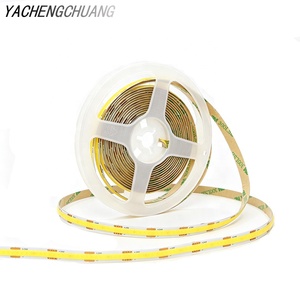
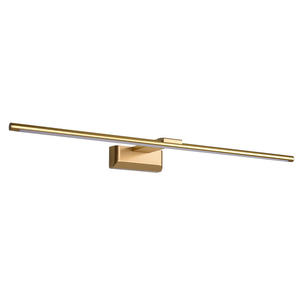
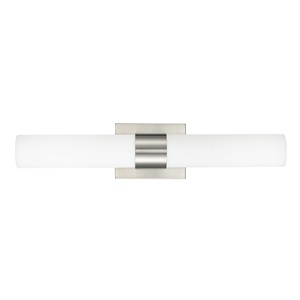
- Voltage Fluctuations & Surge Protection: Seasonal electrical storms in Northern Vietnam frequently cause high-voltage transients. Custom outdoor driver topologies incorporating integrated 6kV to 10kV surge protection devices (SPD) protect delicate COB strip lights, architectural wall sconces, and exterior vanity arrays from grid instability.