
High-CRI, IP68 Silicone Extrusion & Integrated Smart Dimmable Light Engines for Commercial and Residential Specifications
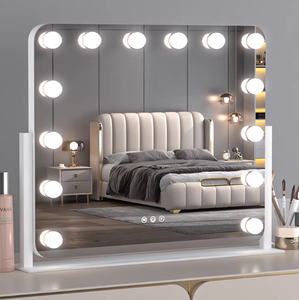
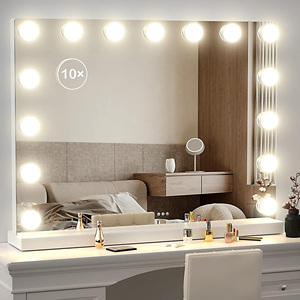
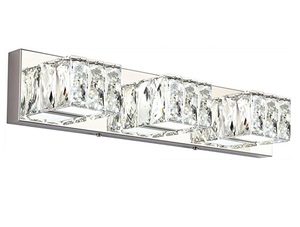
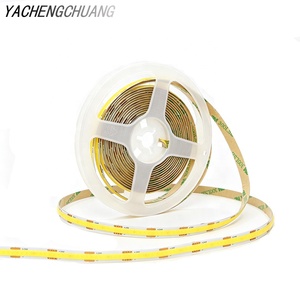
Analysis of SMT, COB, and CSP Architectures in Global B2B Supply Chains
The global solid-state linear lighting industry is undergoing a paradigm shift driven by stringent energy efficacy mandates, demand for seamless visual ergonomics, and the rapid convergence of IoT lighting controls. Historically dominated by traditional Surface Mount Device (SMD 2835, 5050, 3014) topologies, the market is rapidly re-centering around Chip-on-Board (COB) and Chip Scale Package (CSP) linear light engines. Professional specifiers, lighting designers, and OEM procurement managers require a granular understanding of manufacturing tolerances, thermal management substrates, and binning methodologies when selecting global suppliers.
In high-end hospitality, retail, and commercial developments, linear strip lights are no longer viewed merely as supplementary cove lighting; they serve as primary architectural light sources, backlighting elements for vanity systems, and IP68-rated exterior facade fixtures. Ensuring long-term reliability requires strict adherence to ANSI/NEMA C78.377 color binning standards, TM-21 lumen maintenance projections (targetting L70/B10 > 54,000 hours), and high thermal dissipation copper PCB traces (3oz/4oz electrolytic rolled copper).
Comparative Analysis Based on Manufacturing Automation, Testing Rigor, and International Compliance Standards
Leading exporters utilize Japanese High-Speed Fuji or Panasonic SMT placement lines capable of mounting 800+ LED chips per meter with positioning accuracy under ±0.02mm, eliminating hot spots and mechanical solder joint fatigue.
Tier-1 factories guarantee MacAdam Ellipse 2-Step and 3-Step SDCM binning. Utilizing high-resolution Integrating Spheres, CCT tolerances are locked within ±50K across multi-kilometer production batches.
Advanced silicone co-extrusion technology embeds LED strips inside liquid silicone rubber (LSR) matrices, providing superior resistance to UV radiation, salt-spray corrosion, and thermal cycling from -40°C to +80°C.
| Exporter / Manufacturer Tier | Primary Tech Focus | Max Energy Efficacy | Color Consistency | Safety Certifications | Key Export Markets |
|---|---|---|---|---|---|
| Tier 1 Innovation Leaders (AF Lighting Matrix) | Continuous COB / CSP Silicone Extrusion | 140 - 165 lm/W | SDCM ≤ 2 (MacAdam 2-Step) | UL2108, ETL, CE, RoHS, IP68 | North America, Europe, UAE |
| Tier 1 High-Density Specialists | Ultra-Narrow 3mm/4mm Flexible PCB | 120 - 140 lm/W | SDCM ≤ 3 (MacAdam 3-Step) | UL, CE, UKCA, PSE | North America, Japan, EU |
| Tier 2 Commercial High-Volume Exporters | Standard SMD 2835 / 5050 Strips | 100 - 120 lm/W | SDCM ≤ 5 | CE, RoHS, FCC | Southeast Asia, LatAm, Africa |
| Tier 2 Decorative & Smart OEM Factories | RGBW / SPI Addressable Digital Strips | 80 - 100 lm/W | SDCM ≤ 5 | CE, RoHS, ETL | Global E-Commerce, Retail |
Next-Generation Photometric and Material Advances Reshaping Architectural Lighting Specs
Eliminating wire bonds and gold-wire lead frames, CSP technology applies phosphor coating directly onto flip-chip dies. This achieves beam angles up to 180°, higher lumen density per square millimeter, and virtually zero solder joint detachment risks under thermal stress.
Traditional 12V and 24V linear strips suffer from severe voltage drop over extended runs (>10 meters). Next-generation 48V DC and AC Driverless high-voltage strips integrate constant-current ICs every cut-point, maintaining 100% uniform lumen output up to 50 continuous meters from a single power feed.
Modern commercial specifications demand circadian rhythm alignment. Advanced linear light engines utilize full-spectrum spectrum tuning (CRI > 98, R9 > 95, Rf > 95, Rg > 100) with suppressed cyan spikes (450nm) and enhanced melanopic efficacy to optimize alertness and sleep-wake cycles in health, office, and hospitality spaces.
Seamless inter-operability is now essential. Multi-channel strip drivers now natively integrate DALI-2 Device Type 8 (Tunable White & RGBW), Casambi Bluetooth Mesh, and Matter-over-Thread protocols, allowing sub-pixel digital control and predictive maintenance feedback via cloud diagnostics.
Replacing toxic PVC materials, sustainable exporters are shifting toward eco-friendly TPE and food-grade optical silicone co-extrusion. These polymers feature higher thermal stability (>200°C), zero yellowing under intense UV exposure (ASTM G154 standard), and 100% circular economy recyclability.
Rather than relying solely on separate aluminum profile diffusers, next-gen flexible strip lights feature co-extruded micro-prismatic lenses directly on the silicone body. This achieves wall-grazing, wall-washing, and narrow 30°/60° optical beam distributions directly from a flexible strip engine.
When procuring linear strip lighting from international manufacturing hubs, wholesale importers, commercial distributors, and EPC contractors must navigate technical nuances to ensure project longevity and regulatory compliance.
Ensure suppliers provide verified LM-80 test data from accredited laboratories (NVLAP or CNAS). Extrapolated TM-21 calculations must prove lumen maintenance above 90% (L90) at 10,000 hours under maximum operating ambient temperature (Ta = 55°C).
Inadequate PCB copper thickness leads to localized overheating and accelerated lumen degradation. Demand minimum 3oz double-sided electrolytic rolled copper FPCBs for load ratings exceeding 14.4W per meter.
For North American projects, strip lights and power supply driver pairings must strictly comply with UL2108 / UL8750 standards, operating under NEC Class 2 limitations (max 60V DC dry, 30V DC wet, max 100VA output power).
Bridging North American Design Innovation with High-Precision Asian Manufacturing Operations
Every linear batch undergoes rigorous integrating sphere spectroradiometer audits, goniophotometer spatial intensity distribution mapping, and thermal shock testing (-40°C to +85°C chamber cycles) prior to international dispatch.
From tailor-made FPCB widths (3mm to 30mm) and specific cut-length intervals to custom spectral binning (such as specialized horticulture spectrums or bakery/retail lighting curves), our R&D engineering team delivers functional prototypes in under 10 business days.
Engineered and managed from Langhorne, Pennsylvania, with overseas manufacturing assets, we provide direct US-based specification support, rapid spare parts logistics, and dedicated technical assistance for high-volume contract projects.
Technical Answers to Essential Procurement, Voltage Drop, Binning, and Customization Questions