
An authoritative whitepaper for commercial specifiers, hospitality design firms, and wholesale importers evaluating tier-1 glass luminaire manufacturers.
The global market for decorative architectural glass pendants is undergoing a technological and structural paradigm shift. Driven by advanced solid-state illumination, micro-prismatic optical refraction, and stringent energy mandates (such as Title 24 JA8 and EU EcoDesign directives), selecting a OEM/ODM manufacturing partner requires scrutiny far beyond aesthetic appeal. For procurement managers and project architects, securing glass pendants that combine structural integrity, zero-annealing stress, and precision CCT consistency is paramount to minimizing project liability and warranty claims.
This report establishes an empirical evaluation framework for sourcing top-tier glass pendants, decorative vanity luminaires, and commercial pendant suspensions. Whether specifying mouth-blown borosilicate glass for luxury hotel lobbies or high-transmittance soda-lime glass for multi-family residential developments, this guide outlines critical factory vetting parameters, quality control protocols, and emergent technology trends shaping 2026 supply chains.
Engineered for commercial, hospitality, and high-end residential specifications. Fully customizable finishes and driver protocols.
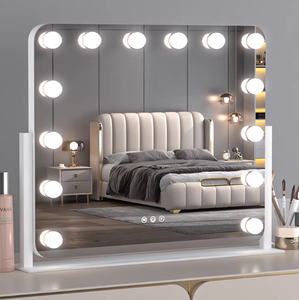
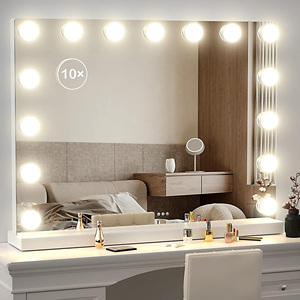
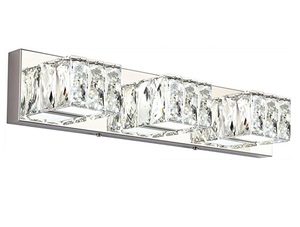
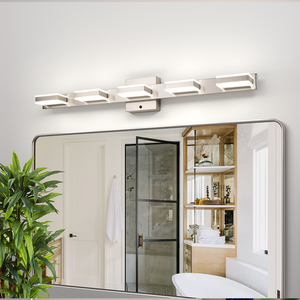
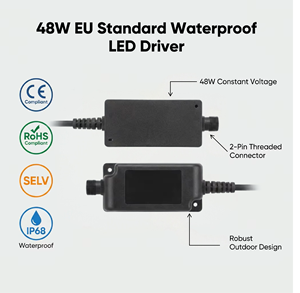
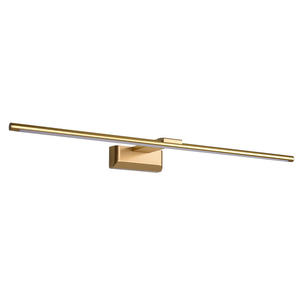
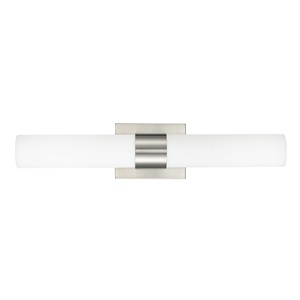
When benchmarking suppliers across North America, Europe, and Asia, use these standardized technical indicators to differentiate original equipment manufacturers from trading intermediaries.
| Evaluation Parameter | Tier-1 OEM Manufacturer (e.g., AF/AIS Group) | Standard Commercial Factory | Trading Intermediary |
|---|---|---|---|
| Glass Annealing Standard | Automated Lehr Annealing with Polarized Stress Mapping | Manual Batch Cooling (Higher Micro-Crack Risk) | Unverified / Outsourced Packaging |
| Color Consistency (SDCM) | MacAdam Ellipse < 3-Step (Strict Binning) | MacAdam Ellipse < 5-Step | Varies across production runs (> 5-Step) |
| Electrical Certification | UL, ETL, CE, CSA Direct Factory Listings | Component-only Certification | Third-party Certificate Reuse |
| Custom Prototyping | 7-14 Days (In-house 3D CAD & Glass Molds) | 30-45 Days | 60+ Days (No Native Tooling) |
| Transit Package Testing | ISTA 3A Drop Tested + Molded EPE Foam Packaging | Standard Bubble Wrap & Cardboard | Basic Retail Packaging |
Strategic supply chain insights for wholesale distributors, architectural specifiers, and hospitality procurement directors.
Driven by EU Right-to-Repair regulations and US LEED v4.1 sustainability credits, procurement specifications are pivoting away from disposable integrated sealed pendants. Leading glass pendant factories now engineer toolless glass canopy removal systems and field-replaceable LED light engines, extending luminaire lifespans past 100,000 operational hours.
In high-reverberation commercial environments such as hotel lobbies, open plan offices, and dining spaces, acoustic control is a primary design concern. Next-generation glass pendants integrate sound-dampening recycled felt or micro-perforated acoustic baffles within the suspension collar, combining optical elegance with NRC (Noise Reduction Coefficient) ratings up to 0.85.
Contract buyers now demand intelligent lighting control natively built into the pendant canopy. Standard phase-cut dimming is being rapidly replaced by multi-protocol smart drivers supporting Matter, Zigbee 3.0, and DALI-2 DT8. Modern glass pendant factories must supply pre-certified wireless drivers capable of smooth 0.1% deep dimming and tunable white dynamic lighting.
Traditional soda-lime glass, while economical, exhibits high thermal expansion and structural weight limitations. Leading glass pendant factories are increasingly utilizing 3.3 borosilicate glass, allowing wall thicknesses to be reduced to 1.8mm while doubling impact strength and thermal shock resistance. This drastically lowers total fixture weight, easing structural ceiling loading in large multi-pendant cluster installations.
Wet chemical spraying and electroplating are being superseded by environment-friendly Physical Vapor Deposition (PVD). PVD enables brilliant, iridescent titanium and metallic gradient finishes directly on the interior glass surface. PVD coatings do not off-gas, offer superior UV resistance without yellowing, and resist scratches during installation maintenance.
Direct LED glare remains a major discomfort factor in modern commercial interiors. Advanced factories now co-mold micro-prismatic textures onto the interior glass shade. This precise optical engineering redistributes directional LED diodes into a uniform, comfortable luminous surface while maintaining high light transmission efficacy (>88%).
Established in 1987 in Langhorne, Pennsylvania, AF Lighting has served as a benchmark US decorative lighting manufacturer and wholesale supplier for over 37 years.
Our US engineering team develops original glass pendant silhouettes each season, creating physical mockups and CAD specifications to ensure seamless installation for electrical contractors.
All glass pendant assemblies are engineered using North American ETL/UL listed components. We conduct rigorous thermal dissipation and high-voltage isolation testing in-house.
From custom finish matching (Pantone/RAL) to dedicated staging in our Pennsylvania distribution facility, we ensure your bulk project orders arrive undamaged and on schedule.
Answers to common technical, logistics, and quality control queries from commercial lighting buyers.
For standard catalog glass pendants, our wholesale MOQ starts at 20-50 units per SKU. For fully custom mouth-blown glass shades requiring bespoke steel mold fabrication, the typical initial production run is 100 to 300 pieces depending on the glass weight and dimension complexity. Sample prototyping is available prior to full production runs.
Top suppliers utilize custom-molded Expanded Polyethylene (EPE) or Polyurethane foam packaging engineered precisely to the shade's contour. The complete master carton must pass ISTA 3A or ISTA 1A 10-point drop testing (including corner, edge, and face impacts) and vibration testing to guarantee intact delivery via ocean freight or parcel express.
Complete luminaire assemblies must bear UL 1598 / CSA C22.2 No. 250.0 certification for hardwired ceiling installation, or ETL equivalents. Portable glass pendants require UL 153 listing. Additionally, integrated LED drivers must comply with FCC Title 47 Part 15 for Class B EMI interference, and California projects require Title 24 JA8 compliance.
Yes. OEM factories can achieve custom hues using solid glass mass tinting (adding metal oxides directly into the molten glass melt), interior/exterior organic lacquering, or advanced Physical Vapor Deposition (PVD). Mass-tinted glass is recommended for contract applications as it will never chip, scratch, or fade over time.
We enforce strict LED chip binning to within 3-step MacAdam Ellipses (SDCM < 3). Furthermore, because tinted glass shades can shift color temperature (e.g., amber glass lowers nominal CCT by 200K-400K), our optical engineers calibrate the raw LED light engine specifically to offset the glass shade's spectral absorption profile.
Access high-resolution CAD files, Photometric IES files, teardown spec sheets, and trade wholesale pricing schedules for your next project.