
The global commercial and residential recessed LED downlight market is undergoing a seismic technological evolution driven by strict efficiency mandates (DLC 5.1, ErP Lot 37), human-centric architectural lighting demands, and unified digital control protocols (DALI-2 DT8, Matter). As procurement officers, electrical engineers, and commercial distributors audit global OEM/ODM manufacturers, technical evaluation parameters have expanded beyond basic lumen efficacy (lm/W) to encompass Unified Glare Rating metrics (UGR < 16), color consistency tolerances (MacAdam 3-Step SDCM), and long-term driver reliability topologies. This technical guide evaluates the industry landscape, presents key factory specifications, and analyzes future structural trends for strategic sourcing.
Engineered to North American and International standards with rigorous quality assurance, thermal management, and premium optical performance.
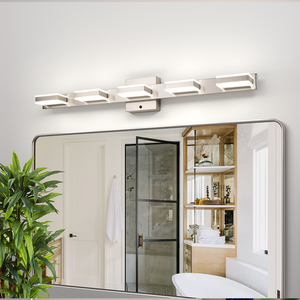
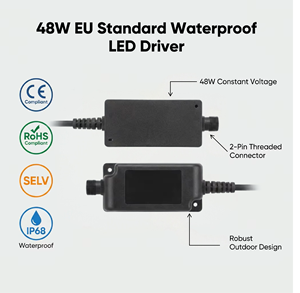
Comprehensive benchmarks used by engineering contractors and OEM procurement teams to audit downlight suppliers.
Evaluating downlight manufacturers requires a granular examination of hardware components, thermal dissipation dynamics, and optical geometry. Subpar suppliers frequently compromise on heat sink mass, electrical isolation, and LED binning, resulting in rapid lumen depreciation and batch color shifts.
Premium downlight exporters utilize Cree, Bridgelux, or Citizen COB packages sorted to 3-step MacAdam Ellipse limits. This guarantees perfect color harmony across expansive hotel corridors, corporate lobbies, and retail environments without visible tint variations.
High-specification downlights feature isolated drivers engineered to IEEE 1789 standards. Utilizing active Power Factor Correction (PFC > 0.95) and ripple current < 3%, these drivers eliminate stroboscopic flicker, protecting occupant visual comfort.
Cold-forged or high-pressure die-cast ADC12 aluminum heat sinks maintain junction temperatures (Tj) below 85°C. Efficient thermal dissipation prevents thermal throttling, maintaining a calculated L70 lifespan exceeding 50,000 continuous operating hours.
By implementing deep-set specular reflectors, micro-prismatic diffusers, and anti-glare baffle rings, modern architectural downlights reduce high-angle glare, achieving Unified Glare Ratings compliant with WELL and LEED building standards.
Architectural downlight systems leverage modular frame assemblies, allowing plaster-in trimless installation alongside interchangeable round, square, pinhole, and wall-washer optical light engines for maximum design adaptability.
Tier-1 downlight exporters provide complete certification packages including UL 1598, ETL, CE, RoHS, IP65/IP68 wet-location ratings, and IC-rated housing approvals for direct contact with building thermal insulation.
Key structural shifts transforming product design, smart protocol integration, and global supply chain strategies.
Architectural lighting is transitioning rapidly from fixed color temperature fixtures to dual-channel COB Tunable White systems (2700K to 6500K). Integrating DALI-2 Device Type 8 (DT8) drivers allows facility managers to mirror natural circadian light curves, improving productivity in offices and promoting wellness in healthcare environments. High-end exporters now offer downlights maintaining a minimum CRI Ra > 97 and R9 > 90 across the entire dimming spectrum.
Hardwired control cables are increasingly replaced by integrated wireless node sockets (Zigbee 3.0, Bluetooth Mesh, and Matter). Modern commercial downlights embed miniaturized RF transceivers directly into the driver chassis or trim bezel, enabling localized occupancy sensing, daylight harvesting, and automated energy monitoring without complex control wiring overhead.
Urban real estate developments face restricted ceiling plenum depth. Leading downlight manufacturers have re-engineered thermodynamic airflow channels, producing shallow-recessed fixtures under 40mm overall height without sacrificing thermal conductivity. Additionally, toolless spring-clamp terminals and magnetic interchangeable bezels reduce field labor installation costs by up to 40%.
European and North American procurement mandates now require Environmental Product Declarations (EPDs). Leading exporters are shifting to 100% recyclable post-consumer aluminum die-cast housings, halogen-free wiring harnesses, and modular repairable light engines that allow LED chip replacement without discarding the aluminum heat sink body.
Why leading global lighting wholesalers, hospitality groups, and distributors partner with AF Lighting / AIS Lights.
With over 37 years of dedicated manufacturing experience, AF Lighting combines North American engineering oversight from Langhorne, Pennsylvania with ultra-efficient global manufacturing supply networks.
Every downlight production lot undergoes 100% high-voltage isolation testing, sphere-photometer optical verification, salt-spray anti-corrosion testing, and continuous 24-hour thermal burn-in aging prior to final export packaging.
From custom housing anodization and specialized beam-angle lenses (15°, 24°, 36°, 60°) to private-label packaging and custom driver pairing, our engineering team assists from preliminary CAD drawings to mass production.
In-depth technical answers for lighting designers, electrical contractors, and commercial buyers.
Optical quality relies on Color Rendering Index (CRI Ra > 90, R9 > 50 for realistic red rendition), MacAdam Ellipse SDCM (≤ 3 steps for color uniformity across fixtures), Unified Glare Rating (UGR < 19 for office environments, UGR < 13 for high-end hospitality), and luminous efficacy (measured in delivered lumens per watt after optical lens losses).
Chip-On-Board (COB) LEDs concentrate multiple LED chips onto a single ceramic substrate, creating a single point light source. This allows precise beam control via reflectors or TIR lenses, producing crisp shadows ideal for accent downlights. Surface Mounted Device (SMD) arrays distribute light over a broader surface, rendering them ideal for wide-diffused general ambient downlighting where low glare over a large aperture is preferred.
North American projects require UL 1598 (Luminaires) or ETL equivalent certification. For downlights installed in direct contact with ceiling insulation, IC-Rated (Insulated Contact) housings are mandatory. Furthermore, ASTM E283 air-tight compliance prevents conditioned air loss into ceiling plenums, while 2-hour fire-rated downlight enclosures are required in multi-story residential construction.
The junction temperature (Tj) of the LED chip directly governs light output decay and color shift over time. Maintaining Tj below 85°C ensures the fixture reaches its rated L70 B10 life expectancy (50,000 hours, meaning 90% of fixtures maintain at least 70% of initial lumen output). High-grade die-cast aluminum heat sinks with optimal surface area and phase-change thermal interface materials (TIM) are critical to achieving this thermal stability.
Commercial downlights support multiple dimming protocols: 0-10V / 1-10V analog dimming (widely used in North America), DALI-2 / D4i digital addressable lighting interfaces (standard for European and modern smart building automation), Phase-Cut / TRIAC / ELV (common for retrofit projects), and wireless protocols like Casambi, Zigbee 3.0, and Bluetooth Mesh.
Standard dry indoor areas utilize IP20 rated downlights. Damp environments such as covered soffits or hotel bathrooms require IP44 or IP54 splashing water protection. Wet zones, such as shower stalls, commercial car washes, or outdoor canopy installations, demand IP65 (dust-tight and jet-water protected) or IP68 (continuous immersion sealed) luminaires equipped with silicone gaskets and waterproof cable glands.
Standard Deviation of Color Matching (SDCM) quantifies color variation between individual LEDs. A 3-step MacAdam Ellipse specification ensures that color differences are virtually imperceptible to the human eye. In bulk downlight procurement, demanding a 3-step or 2-step SDCM guarantee prevents visible CCT variations across large open-plan ceiling grids.
Yes. Custom OEM/ODM downlights can be designed with ultra-shallow heat sinks (< 40mm depth), remote driver junction boxes, or specialized ceiling trim designs (such as plaster-in frameless mud-in rings, bevel bezels, square double-head gimbals, and wall-washer asymmetrical reflectors) to match specific architectural blueprints.
Commercial buyers should require a minimum 5-year full replacement warranty covering both the LED module and the external driver. Exporter quality standards should maintain an overall Field Failure Rate (FFR) below 0.2% during the warranty period, supported by readily available replacement component stocks.
To request photometric IES files, engineering datasheets, or physical samples for project mock-ups, click any "Send an Inquiry" button on this page. Our technical lighting team will review your project specification package and respond within 24 business hours.
Partner with a proven US-backed lighting manufacturer with over 37 years of experience. Access factory-direct wholesale pricing, certified reliability, and custom engineering support.