
Engineered to North American and European compliance standards (ETL, CE, RoHS, IP68). Built for hospitality, commercial showrooms, and high-end residential installations.
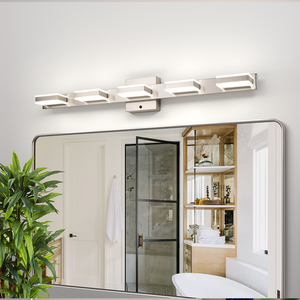
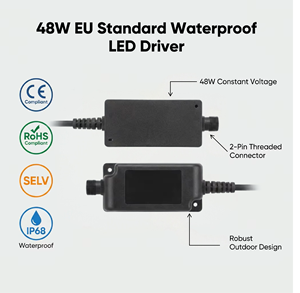
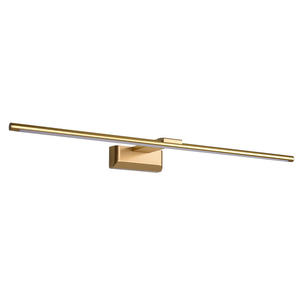
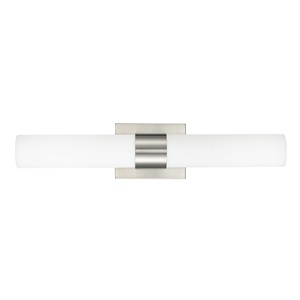
Bridging Western design standards with China’s unmatched supply chain efficiency. Since 1987, our original design and manufacturing infrastructure has powered premier hospitality brands, commercial distributors, and online lighting retailers.
Our state-of-the-art testing facility includes integrated spheres, photometers, and high-temp aging rooms. Every batch undergoes strict spectral analysis, CRI verification, and safety insulation testing compliant with UL 1598 and EN 60598 standards.
From 3D CAD rendering and rapid aluminum extrusion prototyping to custom PCB layout design, our engineering team converts concept sketches into fully certified, mass-producible minimalist lighting fixtures in as little as 21 days.
We mitigate lead-time risk through key component buffering (drivers, LED chips, precision extrusions) and strategic warehousing in Langhorne, PA, ensuring seamlessly scheduled drop-shipments and bulk container logistics worldwide.
The global commercial and residential architectural lighting market is experiencing a structural pivot. Minimalist lighting—once considered a niche aesthetic choice—has evolved into the default structural paradigm for modern real estate developments, luxury hospitality chains, and high-end residential projects. B2B buyers and procurement directors sourcing from China factories must navigate key industry trends to stay competitive.
Architects and interior specifiers are increasingly demanding luminaires that merge into building structures. Traditional surface-mounted bezels are being replaced by plaster-in, rimless, and ultra-slim recessed LED profiles. Factories in China equipped with advanced CNC milling and aluminum die-casting capabilities are leading this transition, delivering frameless channels that allow light to emerge seamlessly from drywalls, ceilings, and millwork.
Global regulations, such as the EU Right-to-Repair directives and updated Energy Star specifications, are forcing a departure from single-use potted luminaires. Procurement teams now prioritize suppliers offering modular LED engines, hot-swappable constant-current drivers, and standardized toolless quick-connectors. This modularity reduces long-term maintenance costs for hospitality facilities and dramatically lowers carbon footprints.
Procurement Insight: When auditing China minimalist lighting factories, verify whether their driver enclosures and LED boards utilize standardized connectors (e.g., WAGO or Molex systems) to ensure frictionless future field servicing for your contract clients.
| Factor | Legacy Decorative Lighting | Next-Gen Minimalist LED Systems | Procurement Impact |
|---|---|---|---|
| Lamping Technology | Replaceable E26/E27 Incandescent/CFL | Integrated COB / Surface Mount LED Boards | Higher lumen efficacy, sleeker profile, lower power consumption. |
| Optical Efficiency | Diffused omnidirectional scatter | Precision TIR lenses & dark-light micro-reflectors | Targeted illumination with glare control (UGR < 16). |
| Driver Integration | Bulky external transformers | Ultra-compact flicker-free Class 2 drivers | Easier fitting in compact junction boxes and shallow ceilings. |
| Sourcing Strategy | Off-the-shelf inventory purchasing | Custom extrusion lengths & modular CCT assembly | Requires agile OEM partners capable of low-MOQ modifications. |
Simplifying a light fixture's external footprint requires increasing the internal technological sophistication. China’s leading lighting suppliers are investing heavily in photobiology, thermal management materials, and wireless control protocols to deliver fixtures that are minimalist in design but powerful in performance.
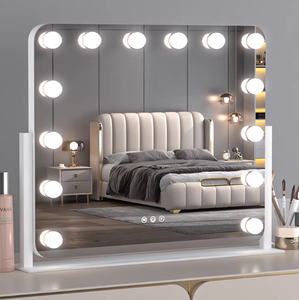
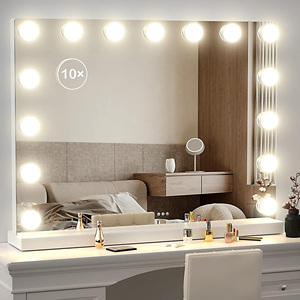
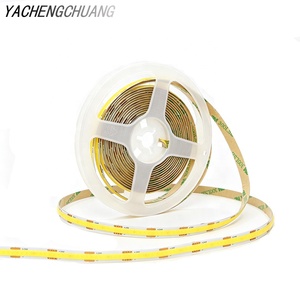
The adoption of COB technology eliminates the visible "dotting" effect of traditional SMD LED strips without requiring thick frosted diffusers. By placing hundreds of LED diodes directly onto a substrate under a continuous phosphor layer, COB strips deliver perfectly uniform illumination in profiles as thin as 4mm—ideal for floating vanity mirrors and integrated shelf lighting.
Modern trade buyers require high Color Rendering Index (CRI Ra > 95, R9 > 80) to accurately represent interior finishes and human skin tones. Furthermore, Tunable White technology (2700K to 6500K) combined with automated circadian-rhythm dimming protocols allows minimalist lighting systems to adapt dynamically from warm relaxing evening glows to energized crisp daytime lighting.
Minimalist aesthetics leave no room for complex wall switches or bulky control hardware. Leading OEM factories are integrating Zigbee 3.0, Casambi BLE, DALI-2, and Matter-compliant micro-controllers directly onto the driver PCB, enabling effortless app-based, touchless capacitive, or voice-activated control.
Reducing fixture size increases thermal density. Top-tier Chinese manufacturers employ high-thermal-conductivity aluminum substrates (6063-T5 alloy) and phase-change thermal interface materials (TIM) to keep junction temperatures low, guaranteeing an L80B10 operational lifespan exceeding 50,000 hours.
Key answers for procurement officers, project engineers, and trade importers navigating OEM/ODM orders.
Reputable tier-1 manufacturers maintain dedicated compliance laboratories and partner directly with national testing organizations like Intertek (ETL), Underwriters Laboratories (UL), and TÜV Rheinland. Fixtures designed for North America utilize UL/ETL listed Class 2 drivers, flame-retardant wiring, and grounding connections compliant with NEC standards. Always request valid certificate numbers that can be verified in public online directories before issuing purchase orders.
Standard catalog SKUs usually feature lower MOQs (ranging from 50 to 100 units). For custom aluminum extrusions or unique custom electroplated finishes (such as brushed brass or matte rose gold), MOQs typically start at 200–500 units to offset tooling setup and CNC programming costs. Flexible suppliers often allow mixed-item container loading to help trade partners manage cash flow.
Color Rendering Index (CRI) measures a light source's ability to reveal true colors. While standard LEDs have a CRI of ~80, vanity and interior architectural lighting require CRI > 90 and an R9 (red color rendering) value > 50. High CRI and R9 ensure natural skin tone representation in bathroom mirrors and vibrant color fidelity for luxury interior fabrics.
Standard sample prototyping for existing profiles takes 7 to 10 working days. Custom ODM designs requiring new extrusion dies take approximately 20 to 25 days for tooling and first-article inspection. Mass production lead times generally range between 30 and 40 days, depending on container volume and component availability.
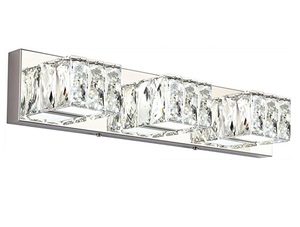
IP44 rating protects against solid objects over 1mm and water splashes from any direction, making it ideal for indoor vanity mirrors and hotel bathroom sconces. IP68 offers complete dust-tight ingress protection and continuous submersion capability, required for high-humidity environments, outdoor linear facades, or heavy washdown commercial areas.
Yes. Our factory offers multi-dimming intelligent drivers that automatically detect and support leading-edge/trailing-edge TRIAC, 0-10V analog, and digital DALI-2 protocols. This universal compatibility ensures easy integration into smart home systems (Lutron, Control4) and commercial building management systems (BMS).