
Engineered for high color fidelity, low flicker metrics, and architectural durability across hospitality, residential, and workspace installations.
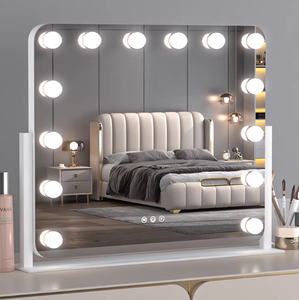
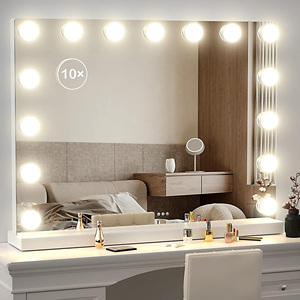
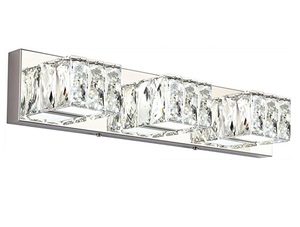
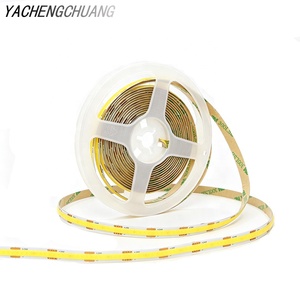
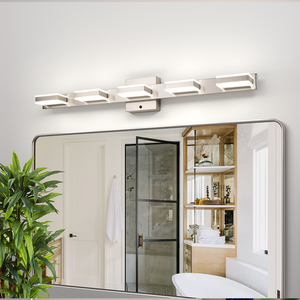
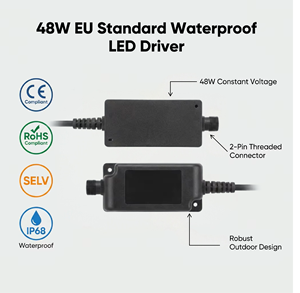
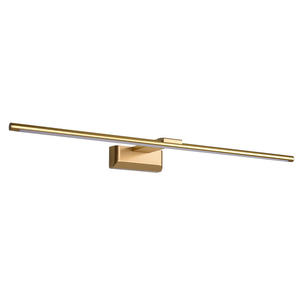
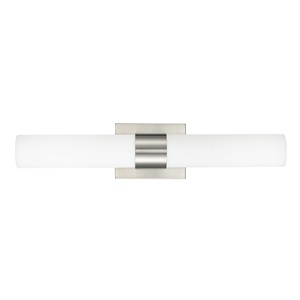
Balancing design heritage, international compliance engineering, and robust supply chain infrastructure.
Headquartered in Langhorne, Pennsylvania (16 Cabot Blvd E), our technical team designs, prototypes, and evaluates every fixture series against rigorous mechanical, thermal, and optical tolerances before mass production.
All European export configurations fully satisfy the Low Voltage Directive (LVD 2014/35/EU), Electromagnetic Compatibility (EMC 2014/30/EU), and EcoDesign ErP regulations (EU 2019/2020), preventing customs bottlenecks.
Task luminaires undergo IEC/EN 62471 photobiological safety testing to guarantee RG0 (Risk Exempt Group) status, ensuring zero retinal blue-light hazard for prolonged work or cosmetic tasks.
From custom housing lengths and bespoke IP-rated structural seals to specialized CCT tuning microcontrollers, our factory setups accommodate tailored project specifications with low MOQs.
Every manufacturing run undergoes incoming component validation (IQC), 100% high-voltage dielectric withstand testing, thermal imaging during 48-hour burn-in, and ISTA-certified drop testing.
Supplying trade showrooms, commercial contractors, and retail giants (Home Depot, Wayfair, Houzz) worldwide with streamlined customs paperwork, tariff classification, and spare parts buffer stock.
Task lighting has evolved from simple localized illumination into a high-precision discipline combining optical physics, biological human-centric design, and strict international electrical safety standards. For global B2B buyers, architectural specifiers, and OEM importers, verifying CE certification is not merely a legal requirement for market entry into the European Economic Area (EEA)—it is the definitive baseline of structural, electrical, and photobiological integrity.
"True compliance in task lighting requires harmonizing EN 60598-1 structural safety, EN 62471 optical ergonomics, and low-flicker driver design to protect end-user ocular health while ensuring decades of operational reliability."
When procuring from task lighting manufacturers and factories, global buyers must audit three critical directive pillars that constitute full CE authorization:
To assist procurement managers in drafting strict RFP parameters, the table below outlines the enterprise-grade manufacturing baseline maintained across AF Lighting production lines:
| Technical Parameter | Standard Enterprise Baseline | Commercial Grade Specification | Engineering Impact |
|---|---|---|---|
| Color Rendering Index (CRI) | Ra ≥ 80 / R9 > 10 | Ra ≥ 95+ / R9 ≥ 80 | Prevents skin tone distortion and color misjudgment in grooming & task environments. |
| Color Consistency (SDCM) | < 5-Step MacAdam Ellipse | ≤ 3-Step MacAdam Ellipse | Eliminates visible color variance between adjacent installed task luminaires. |
| Flicker Percent & SVM | Pst LM < 1.0, SVM < 0.9 | Pst LM ≤ 0.2, SVM ≤ 0.1 (Flicker-Free) | Prevents stroboscopic optical strain, migraine triggers, and eye fatigue during prolonged use. |
| Photobiological Safety | RG1 (Low Risk) | RG0 (Exempt Group - IEC 62471) | Zero blue light hazard; completely safe for continuous close-proximity direct viewing. |
| Driver Power Factor (PF) | PF > 0.85 | PF > 0.95 (Active PFC) | Maximizes electrical grid efficiency; reduces reactive power waste in commercial buildings. |
| Ingress Protection (IP) | IP20 (Indoor Workspaces) | IP44 / IP68 (Vanity / Damp Locations) | Guarantees complete protection against dust ingress and high-pressure water spray. |
As commercial real estate, luxury hospitality, and high-end residential spaces demand increasingly dynamic lighting environments, the global procurement landscape for task lighting is undergoing fundamental technology-driven shifts. B2B buyers must align their supply chain sourcing with these four emerging macro-trends to ensure long-term asset value and ESG compliance.
Modern task lighting is transitioning rapidly from fixed Color Temperature (CCT) chips to advanced Dual-Channel Tunable White engines (2700K to 6500K). By mimicking natural solar circadian cycles—cool high-intensity light for morning cognitive alertness and warm low-intensity light for evening wind-down—HCL-enabled task fixtures boost workplace productivity and wellness. Procurement contracts increasingly demand micro-controllers compatible with DALI-2, 0-10V, and wireless Bluetooth Mesh / Matter protocols.
Traditional SMD (Surface Mount Device) LED strips often suffer from visible pixelation ("hotspots") when mounted in close-proximity mirror lights or under-cabinet task bars. Next-generation task lighting standardizes high-density COB technology (up to 512 chips per meter) coupled with laser-etched PMMA micro-groove optical diffusers. This combination achieves perfectly continuous, shadowless light distribution across working planes with zero optical glare (UGR < 19).
European Union sustainability frameworks are enforcing strict modular repairability standards. Disposable, fully sealed lighting assemblies are being phased out in favor of modular designs featuring toolless driver replacement, standardized IEC quick-connect wiring harnesses, and high-purity recyclable aluminum extrusions. Factory production lines must adapt to modular assembly topologies to reduce total cost of ownership (TCO) for institutional facility operators.
Enterprise buyers now require Environmental Product Declarations (EPDs) alongside standard CE certifications. Manufacturers must detail raw material provenance, energy consumption metrics during aluminum die-casting, and post-consumer recycled packaging ratios. Factories maintaining ISO 14001 environmental management certifications offer a distinct competitive edge in international tender evaluations.
Direct technical and regulatory answers regarding CE certification, OEM manufacturing, testing protocols, and trade logistics.