
Explore our CE-certified linear pendant series engineered for low UGR, high CRI90+ color fidelity, and seamless DALI-2 integration across office, retail, and hospitality spaces.
In modern architectural lighting design, linear pendant fixtures have evolved from pure functional luminaires into core structural components that define spatial aesthetics, optical comfort, and energy management in commercial environments. Navigating the European Union compliance landscape requires an in-depth understanding of the strict electrical safety, electromagnetic compatibility (EMC), and eco-design mandates required by CE marking.
As a specialized manufacturer and supplier of architectural linear pendants, our production protocols adhere rigorously to the directives set forth by the European Committee for Electrotechnical Standardization (CENELEC). Obtaining true CE compliance involves far more than placing a mark on an aluminum extrusion; it demands systematic validation under specific Harmonized European Standards (EN standards):
Core Compliance Directive: CE compliance for commercial linear pendants requires full certification under the Low Voltage Directive (LVD 2014/35/EU), Electromagnetic Compatibility Directive (EMC 2014/30/EU), and Eco-design Directive (EU 2019/2020) for light sources and separate control gears.
Safety engineering forms the foundation of every CE-certified linear pendant manufactured in our facility. Under EN 60598-1 (General Requirements and Tests for Luminaires) and EN 60598-2-1 (Fixed General Purpose Luminaires), linear pendant luminaires undergo rigorous physical and electrical safety evaluations:
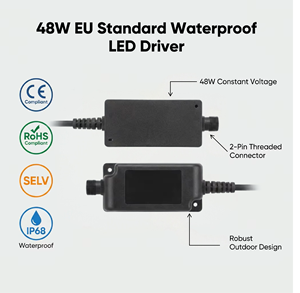
Commercial linear pendants are deployed in modern buildings heavily saturated with sensitive electronics, wireless access points, and modern building management systems (BMS). Under EN 55015 (Radio Disturbance Characteristics) and EN 61000-3-2 (Harmonic Current Emissions), our LED drivers are engineered to prevent electrical noise injection back into the grid:
Designed for specifiers, electrical engineers, and lighting contractors who require robust mechanical build quality and precision photometric output.
Structural extruded aluminum housing acting as a continuous heat sink. Maintains LED junction temperatures below 65°C, securing an L80B10 operational lifespan exceeding 50,000 hours.
Multi-layer optical structures utilizing optical-grade PMMA light guide plates and micro-de-glare structures to control luminance angles, meeting strict EN 12464-1 office lighting criteria.
Fully compliant with DALI-2 (IEC 62386) standards, supporting bi-directional communication, energy monitoring, smooth 0.1% micro-step dimming, and emergency power takeover.
Premium LED emitters sorted within 3-step MacAdam Ellipses ensure absolute color uniformity along extended continuous light runs across massive commercial ceiling grids.
Tool-less mechanical and electrical connectors allow infinite linear runs, L-shape, T-shape, and rectangular geometric configurations without visible light leakage at joints.
Dual-emission optics providing 70% direct downward task illumination paired with 30% indirect upward ambient wash, reducing ceiling contrast ratios and creating spatial volume.
Our OEM/ODM manufacturing capability enables comprehensive customization of drive currents, color rendering indices, physical finish colors, and continuous run dimensions to meet contract specifications.
| Parameter Specification | Standard Commercial Grade | High-Efficacy Specification Grade |
|---|---|---|
| System Efficacy | 110 - 125 lm/W | 135 - 150 lm/W |
| Color Rendering Index (CRI) | Ra > 80 / R9 > 0 | Ra > 90 / R9 > 50 (Full Spectrum Available) |
| Correlated Color Temperature (CCT) | 3000K / 4000K / 5000K Fixed | Tunable White (2700K - 6500K DALI-DT8) |
| Glare Rating (UGR) | UGR < 22 (Opal Diffuser) | UGR < 19 (Micro-Prismatic Structure) |
| LED Driver Integration | Internal ON/OFF or 0-10V | DALI-2 / Push-DIM / Casambi Wireless Mesh |
| Housing Material | Heavy-Duty Extruded 6063 Aluminum | Anodized / Powder Coated (RAL Custom Options) |
| Certification Standard | CE (LVD, EMC, RoHS), REACH | CE, ETL Listed, ENEC, CB Scheme |
Tracing our heritage back to manufacturing roots established in 1987 (originally engineered through North American trade operations, AF Lighting), our factory platform combines nearly four decades of decorative and commercial lighting engineering with state-of-the-art automated manufacturing lines. We specialize in supplying lighting wholesalers, commercial project contractors, engineering procurement corporations (EPCs), and architectural design firms worldwide.
While many lighting suppliers operate strictly as trading intermediaries, our integrated manufacturing infrastructure delivers full vertical control over the entire production cycle:
Our aluminum processing shop operates high-tonnage extrusion presses capable of producing ultra-precise linear profiles. Integrated CNC milling machines cut, punch, and tap luminaire profiles with sub-millimeter tolerances. Surface finishes include high-durability electrostatic powder coating (RAL9016 White, RAL9005 Black) and architectural anodizing designed to withstand corrosive environments.
We maintain clean-room SMT lines fitted with high-speed Yamaha and Panasonic pick-and-place machinery. LED boards are printed on thermal metal-core PCBs (MCPCB) using premium LED chips (Nichia, Bridgelux, Samsung, Osram). Every LED board undergoes 100% automated optical inspection (AOI) before driver integration.
Our internal testing lab is equipped with a 2-meter Integrating Sphere, Type-C Goniophotometer, Thermal Shock Chambers, and EMC Conducted Emission Test Receivers. Every batch produced generates authentic IES and LDT photometric files required by lighting designers for Dialux and Relux software simulations.
To deliver maximum Information Gain for procurement professionals planning multi-year contract rollouts, our R&D engineering division continuously tracks emerging regulatory and technological shifts in European commercial lighting markets:
Circadian-effective lighting is shifting from a luxury option to a standard requirement in corporate offices and educational spaces. Modern linear pendants are increasingly specified with Dual-Channel DALI DT8 drivers and bi-color LED clusters. These systems dynamically adjust correlated color temperature (from 2700K warm tone at dawn to 6500K cool white at noon) and intensity, mimicking natural sunlight patterns to enhance worker productivity and well-being.
Under the EU's updated Eco-design regulations (Right to Repair legislation), lighting specifiers are avoiding sealed, disposable fixtures. Future-proof linear pendants feature toolless driver replacement mechanisms, quick-disconnect wiring harnesses, and modular optical engines. This allows building facility managers to replace drivers or upgrade LED strips at end-of-life without replacing the structural aluminum chassis, dramatically lowering total cost of ownership (TCO) and embedded carbon footprints.
Linear pendants are no longer standalone light sources; they serve as physical infrastructure nodes for smart building management. Our next-generation linear profiles integrate miniature microwave daylight-harvesting sensors, PIR motion detectors, and Bluetooth Low Energy (BLE) mesh nodes directly into the fixture end-caps or optical diffusers. This enables automated energy management, heat-mapping occupancy analytics, and automated lighting control across entire building floorplates.
As modern corporate interiors favor open concrete ceilings and hard surface flooring, acoustic comfort has become a critical challenge. Modern linear pendant design integrates high-density recycled PET sound-absorbing felt directly alongside high-efficacy optical engines. This hybrid approach delivers dual functionality: controlling reverberation time (RT60) while providing visual comfort under UGR<19 specifications.
Key technical considerations, certification verifications, and custom manufacturing terms for commercial procurement teams.
Submit your project specification requirements, engineering drawings, or bill of materials today. Our technical engineering team provides detailed quotations, photometric simulation files, and factory direct pricing within 24 hours.