
0%

Choosing Institutional Lighting Supplies worldwide is not simply a purchasing decision. It is an operational decision affecting safety, energy use, comfort, and maintenance.

The need is substantial. The United Nations Environment Programme and GlobalABC reported in the 2023 Global Status Report that buildings consume about 30% of global final energy. They also produce approximately 26% of energy-related emissions. Lighting is only one part of this footprint, but it is highly visible and measurable. The International Energy Agency has estimated that lighting historically used around 15% of global electricity. Efficient systems can therefore create meaningful savings across schools, hospitals, offices, transport facilities, and public buildings.

The answer is not simply “buy more LEDs.” Quality matters. A reliable supplier should provide verified photometric data, suitable color temperatures, glare control, emergency options, and dependable warranties. The U.S. Department of Energy’s Solid-State Lighting research reports continue to highlight progress in LED efficacy, controls, and connected systems. These improvements can support lower operating costs and better visual conditions, especially in corridors, classrooms, and clinical areas.

Consistency matters worldwide.

Institutional Lighting Supplies should also support local installation practices and applicable safety requirements. One product may perform well in a warehouse but fail in a humid hospital corridor. That uncomfortable possibility deserves attention. Buyers should compare lifetime performance, not only purchase price. They should also review maintenance access, spare-part availability, driver quality, and control compatibility. No catalog can remove every project risk. However, experienced suppliers can reduce uncertainty through documented testing, practical recommendations, and responsive technical support. That combination makes global sourcing more credible, resilient, and useful.
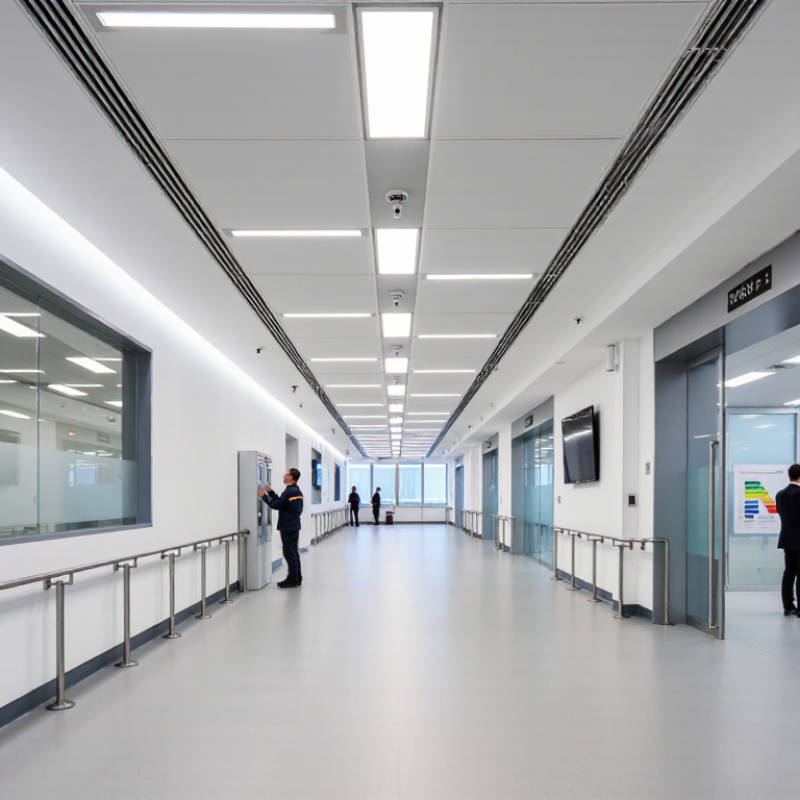
Why Choose Institutional Lighting Supplies Worldwide?

What Institutional Lighting Supplies Include and How They Are Classified

Institutional Lighting Supplies Worldwide

Institutional lighting supplies cover the equipment used in schools, hospitals, offices, transport facilities, and public buildings. They include luminaires, LED modules, drivers, lamps, emergency units, sensors, controls, mounting parts, and replacement components. Reliable projects often need more than attractive fixtures.

These supplies are commonly classified by application, installation method, performance, and environment. Application categories include classroom lighting, medical task lighting, corridor lighting, office panels, and outdoor security lighting. Installation types may include recessed, surface-mounted, suspended, wall-mounted, or weather-resistant systems. Performance classifications consider brightness, glare control, color rendering, energy use, and emergency operation. Environmental classes address moisture, dust, heat, and cleaning requirements.

A neat classification can still mislead. A corridor and a treatment room may need very different visual comfort.

Tips:

Check voltage, frequency, control compatibility, mounting dimensions, and local safety requirements before ordering. Request photometric data and maintenance guidance. Confirm spare-part availability, especially for large facilities. Small details matter.

From practical project reviews, classification should begin with the building’s actual use. A bright fixture is not automatically suitable for patient rooms or computer workstations. Lighting calculations, occupancy patterns, ceiling height, and maintenance access should guide selection. Worldwide supply also requires careful documentation, packaging, and climate-aware specifications. Mistakes happen. A product may fit physically but fail operationally when controls, wiring, or replacement schedules are overlooked.

How Global Suppliers Support Institutional Lighting Requirements

Institutional lighting projects rarely follow one universal formula. Schools, hospitals, offices, and transport facilities each create different visual demands. Global suppliers support these requirements by studying room layouts, operating hours, ceiling heights, and maintenance access. They can recommend suitable beam angles, color temperatures, glare control, and emergency lighting options. A classroom may need balanced light for reading and digital screens. A hospital corridor demands consistent illumination and easy cleaning. Small details matter.

Reliable suppliers provide photometric files, energy calculations, installation guidance, and compliance documents. These materials help architects and facility managers compare solutions with evidence, rather than attractive pictures alone. They also clarify electrical compatibility, dimming methods, warranty conditions, and replacement procedures. For public buildings, suppliers must consider local safety rules and procurement requirements. Documents should be clear, current, and traceable. This is where expertise becomes practical.

International delivery adds another layer of responsibility. Suppliers coordinate packaging, shipping schedules, regional voltage requirements, and technical communication. Installation teams need accurate drawings and accessible support during commissioning. A pilot installation can reveal glare, unexpected shadows, or uncomfortable color perception before full deployment. It can also expose weak assumptions in the original specification. I have seen projects change after users tested the lighting at different times of day. That feedback is valuable, even when it feels inconvenient. Not every specification is perfect. Continuous review helps institutional lighting perform reliably for the people who depend on it.

Which Performance Standards Matter in Institutional Lighting

Why Choose Institutional Lighting Supplies Worldwide?

Which Performance Standards Matter in Institutional Lighting

Institutional lighting must prove more than brightness. It must support safety, concentration, comfort, and predictable maintenance. The IEA’s Energy Efficiency 2023 report identifies lighting efficiency as a practical source of electricity savings. Yet wattage alone can mislead. A low-power fixture may create glare, uneven floors, or uncomfortable shadows. In schools, hospitals, and public offices, measure maintained illuminance, uniformity, glare control, and color quality. EN 12464-1 provides useful lighting criteria for indoor workplaces. UGR limits help designers control visual discomfort. CRI should not stand alone; demanding projects may also review TM-30 results.

Reliability needs evidence, not attractive claims. IEC 60598-1 addresses general luminaire safety. LM-79 supports independent photometric testing, while LM-80 and TM-21 help evaluate LED package and lumen-maintenance behavior. The U.S. Department of Energy’s 2023 Solid-State Lighting report notes that advanced LED packages can exceed 200 lumens per watt, but real fixtures usually perform lower. Optical losses, heat, drivers, and dirt reduce results. This gap deserves honest review. A product can pass one test and still fail in a busy corridor.

Tips: Request complete test reports, not screenshots. Check flicker data, emergency operation, operating temperature, warranty terms, and replacement access. Compare performance after cleaning cycles. Ask whether local installers can verify readings after commissioning. I would also test a small area first; specifications rarely reveal every visual problem.

How Energy Efficiency and Smart Controls Improve Facility Lighting

Why Choose Institutional Lighting Supplies Worldwide?

Institutional lighting must serve people for long hours, often in demanding spaces. Schools, hospitals, offices, and transport facilities cannot treat lighting as decoration. They need reliable fixtures, clear specifications, and measurable energy performance. Experienced facility teams begin with a lighting audit. They record operating hours, glare problems, maintenance access, and daylight levels before selecting equipment.

Energy-efficient LED systems can reduce electricity use and heat output when correctly sized. However, efficiency is not only about wattage. A corridor with poor distribution may need more fixtures later. That mistake increases costs and disrupts daily operations. Photometric planning helps engineers place suitable light levels where people actually work. In classrooms, uniform illumination supports reading. In stairwells, consistent visibility supports safer movement.

Smart controls add another layer of practical value. Occupancy sensors can lower output in empty meeting rooms. Daylight sensors can reduce artificial lighting near windows. Scheduling systems can align lighting with cleaning, teaching, and shift patterns. These controls need careful commissioning. A sensor that switches off too quickly frustrates staff. A weak control strategy may encourage users to disable the system. Facility managers should review settings after installation and inspect performance during real working hours. Local electrical rules, emergency-lighting requirements, and maintenance skills also affect worldwide supply decisions. The best technical choice can still fail when replacement parts or training are unavailable.

Why Choose Institutional Lighting Supplies Worldwide?

How Energy Efficiency and Smart Controls Improve Facility Lighting

Efficient LED systems and smart controls can significantly reduce lighting electricity use in institutional facilities. The ranges shown are typical planning estimates for individual strategies; actual savings depend on operating hours, existing equipment, occupancy patterns, daylight availability, and control settings. The percentages should not be added together because strategies may overlap.

How to Evaluate Worldwide Institutional Lighting Suppliers

Why Choose Institutional Lighting Supplies Worldwide?

How to Evaluate Worldwide Institutional Lighting Suppliers

Choosing a worldwide institutional lighting supplier requires more than comparing prices. In practice, dependable supply begins with verified technical information. Request photometric files, lumen data, color consistency, beam angles, and rated service life. Check whether products suit schools, hospitals, offices, or public facilities. Each space has different glare, maintenance, and safety demands. Ask for recognized testing documentation and clear compliance records. A polished catalogue can still hide weak performance. That detail matters.

Tips: Request samples before large orders. Test them in the actual room. Review warranty terms, spare-part access, packaging, and delivery schedules. Ask who handles technical questions after installation. Reliable suppliers explain limitations instead of promising everything. Communication quality is useful evidence. So is a complete installation guide. A low price may become expensive when replacements arrive late.

Evaluate manufacturing consistency across repeated batches. Ask how suppliers manage quality checks, factory changes, and shipment inspections. Confirm that stated specifications remain stable over time. Sustainability claims should include measurable information, such as material content, energy performance, and product lifespan. Local installation partners can also reduce training problems. However, distance still creates risk. Time zones, language gaps, and customs delays may complicate urgent support. No evaluation checklist is perfect. Leave room for site conditions, budget changes, and lessons learned after installation.

Why Choose Institutional Lighting Supplies Worldwide? — How to Evaluate Worldwide Institutional Lighting Suppliers
Evaluation Dimension Practical Benchmark Why It Matters for Institutions What to Verify with a Worldwide Supplier
Regulatory Compliance Products should be tested to the applicable national or regional lighting and electrical-safety requirements. Schools, hospitals, offices, transport facilities, and public buildings may be subject to mandatory safety, electromagnetic-compatibility, and energy regulations. Request current test reports, declarations of conformity, safety documentation, and the exact standards used for the destination market. Confirm that documents apply to the specified product and revision.
Photometric Performance Review delivered lumens, luminous intensity distribution, beam angle, glare data, and utilization assumptions—not only rated lumens. Accurate photometric data helps designers meet illumination targets while avoiding over-lighting, dark areas, and unnecessary energy use. Ask for an LM-79-style photometric report or equivalent laboratory data, photometric files such as IES or LDT, and the test conditions used for the figures.
Energy Efficiency Compare system efficacy in lumens per watt, including the driver and controls where applicable. Institutional buildings often operate for long hours, so small differences in system efficacy can materially affect operating costs and carbon emissions. Compare complete-fixture wattage with delivered lumens. Check whether the published figure excludes the driver, emergency module, sensors, or other accessories.
Color Quality CRI of 80 or higher is commonly used for general institutional areas; higher color-rendering performance may be required for healthcare, retail, or inspection spaces. Consistent color appearance supports visual comfort, wayfinding, reading, clinical tasks, and accurate assessment of materials and surfaces. Confirm CRI, R9 performance where relevant, color-consistency data such as MacAdam steps, and the permitted color-temperature range.
Color Temperature Common institutional choices include approximately 3000 K, 3500 K, and 4000 K, selected according to the task and interior environment. Color temperature affects visual atmosphere, perceived brightness, occupant comfort, and consistency across rooms and buildings. Confirm the nominal CCT, tolerance, available options, and whether separate batches can maintain the same appearance over a multi-phase project.
Glare Control Select the applicable glare rating according to the activity, mounting height, viewing direction, and local design standard; UGR is commonly used for indoor projects. Controlled glare improves visual comfort and is especially important in classrooms, offices, computer rooms, libraries, and healthcare areas. Request the UGR calculation or photometric file used for the project. Do not treat a single UGR value as universal because room geometry changes the result.
Service Life and Reliability Evaluate the complete system life, commonly expressed as an L70 or L80 rating, together with the stated operating conditions. Long service life reduces relamping, access equipment, labor disruption, and maintenance costs in large or difficult-to-access facilities. Check the rated life, ambient-temperature limits, switching-cycle assumptions, lumen-maintenance method, failure-rate information, and heat-management design.
Warranty and After-Sales Support A clearly written multi-year commercial warranty should identify coverage, exclusions, claim procedures, and replacement responsibilities. Institutions need predictable risk management because lighting failures can affect safety, productivity, public access, and scheduled operations. Review warranty duration, geographic coverage, labor and freight responsibilities, spare-part availability, response times, and the process for batch-related failures.
Ingress and Impact Protection Choose the IP and IK ratings according to exposure and physical-risk conditions; higher ratings are typically needed for damp, dusty, outdoor, or vulnerable locations. Appropriate enclosure protection improves safety and reduces failures caused by water, dust, cleaning procedures, and accidental impact. Verify that the IP and IK claims apply to the complete installed product, including covers, connectors, glands, and mounting accessories where relevant.
Controls and Interoperability The product should support the control protocol and dimming method required by the project, such as 0–10 V, DALI-2, occupancy sensing, or daylight control. Controls can reduce energy consumption, support zoning, improve occupant comfort, and provide useful operational data. Confirm compatibility among the fixture, driver, sensors, gateways, emergency systems, and building-management platform. Request commissioning and troubleshooting documentation.
Emergency Lighting Capability Emergency products must meet the applicable emergency-lighting requirements for the destination country and building type. Reliable emergency illumination supports safe evacuation and continuity of essential routes during a power interruption. Verify emergency duration, battery type, charging time, self-test options, maintained or non-maintained operation, photometric performance, and local certification requirements.
Supply Capacity Assess documented production capacity, standard lead times, minimum order quantities, and the ability to maintain identical specifications over the project schedule. Large institutional projects are often delivered in phases, making continuity and repeatability as important as the initial price. Request a production schedule, capacity statement, sample-approval process, batch-control method, escalation contacts, and a written plan for shortages or discontinued components.
Global Logistics A capable supplier should provide clear shipping terms, export documentation, packaging specifications, and destination-specific delivery planning. International procurement introduces risks involving customs, transit damage, taxes, currency, insurance, and project-site coordination. Clarify Incoterms, packing details, shipment tracking, insurance responsibility, customs documents, delivery milestones, and procedures for damaged or missing goods.
Total Cost of Ownership Compare purchase price, installation, electricity, controls, maintenance, replacement parts, warranty risk, and disposal costs over the intended service period. The lowest initial price may not deliver the lowest lifetime cost, particularly in facilities with long operating hours or expensive maintenance access. Request a project-specific lifecycle-cost model using actual wattage, operating hours, electricity rates, maintenance intervals, expected failures, and financing assumptions.
Documentation and Technical Transparency Technical data should be complete, consistent, dated, and traceable to the exact model, configuration, and driver combination. Reliable documentation reduces design errors, simplifies approvals, supports tender comparisons, and protects the institution during audits or future replacements. Collect datasheets, installation instructions, photometric files, wiring diagrams, BIM files where needed, environmental declarations, certificates, and revision-controlled drawings.
Sustainability and End-of-Life Prefer efficient, repairable, recyclable products with transparent material and packaging information. Public and private institutions increasingly track energy use, embodied impacts, hazardous substances, waste, and responsible procurement practices. Ask about recyclable content, restricted substances, packaging reduction, replaceable components, take-back options, environmental declarations, and energy-monitoring support.

FAQS

Why do institutional lighting projects need different solutions?

Schools, hospitals, offices, and transport facilities have different visual demands. Ceiling height, room use, operating hours, and maintenance access all matter.

What lighting qualities should schools and hospitals prioritize?

Classrooms need balanced light for reading and screens. Hospital corridors need even illumination, controlled glare, and surfaces that are easy to clean.

Which performance measurements are important?

Review maintained illuminance, uniformity, glare control, color quality, and flicker. Brightness alone can hide uncomfortable shadows or uneven floors.

Why should wattage not be the only comparison?

Low power does not guarantee useful light. Heat, optics, drivers, and dirt can reduce real performance. The advertised result may be optimistic.

What documents should suppliers provide?

Request photometric files, energy calculations, installation drawings, safety documents, and warranty conditions. Clear records support evidence-based comparisons.

How can a project reduce glare and unexpected shadows?

Test a small area before full installation. Check the space in daylight and evening conditions. A pilot can reveal problems early.

What should buyers check for international delivery?

Confirm packaging, shipping schedules, regional voltage, electrical compatibility, and installation support. Accurate drawings help teams during commissioning.

How can facility managers judge long-term reliability?

Review maintenance access, emergency operation, replacement procedures, operating temperatures, and test reports. Inspect performance after cleaning cycles. Claims need checking.

Are standard test results enough to guarantee good lighting?

No. A fixture can pass testing yet perform poorly in a busy corridor. User feedback and onsite readings remain necessary.

Why is continuous review valuable after installation?

People may notice glare, strange color perception, or shadows at different times. Not every specification is perfect. Practical feedback should change the plan when needed.

Conclusion

Institutional Lighting Supplies are essential components for schools, hospitals, offices, public facilities, transportation centers, and other large-scale environments where reliable illumination, safety, and visual comfort are priorities. They may include indoor fixtures, outdoor systems, emergency lighting, task lighting, high-bay solutions, controls, replacement components, and customized project packages. These products can be classified by application, installation method, light distribution, power source, and control capability.

Worldwide suppliers support institutional lighting requirements by offering scalable product selections, technical guidance, project coordination, and dependable logistics for different facility conditions. Important performance standards include energy efficiency, light quality, durability, electrical safety, maintenance requirements, and suitability for local operating environments. Efficient light sources, occupancy sensors, daylight harvesting, scheduling, and centralized smart controls can reduce energy use while improving comfort and operational visibility. When evaluating global suppliers, facility managers should compare product performance, documentation, customization options, delivery reliability, technical support, warranty policies, and long-term operating value rather than focusing only on initial cost.

Alexander

Alexander

Alexander is a dedicated marketing professional with extensive knowledge of the company’s products, services, and target markets. Through a combination of strategic thinking, industry research, and practical experience, he helps communicate the company’s value clearly to customers and business......