
0%

Pendant Light Fixtures can do more than brighten a room. They bring light closer to the places where people gather, work, and eat. Above a kitchen island, a row of pendants can illuminate chopping boards while giving the room a clear focal point. Over a dining table, one well-scaled fixture can make an everyday meal feel more considered. Small details matter.

Lighting designer Randall Whitehead describes lighting as “the jewelry of the home.” Pendant Light Fixtures show why that comparison works: their shape, finish, and glow can influence a room’s character. Yet appearance alone is not enough. A broad shade may feel heavy in a compact kitchen, while a narrow pendant may leave a large table unevenly lit. Measure the space, check ceiling height, and consider whether the fixture supports dimming before choosing.

This guide explores how pendant lighting can balance function and style, and where it may fall short. It considers placement, materials, bulb choice, and room proportions, with practical questions to ask before installation. The right fixture should suit the way a space is used—not just a photograph. There is no perfect choice for every room. Even an attractive pendant can create glare or shadows if positioned poorly. That deserves a second look.
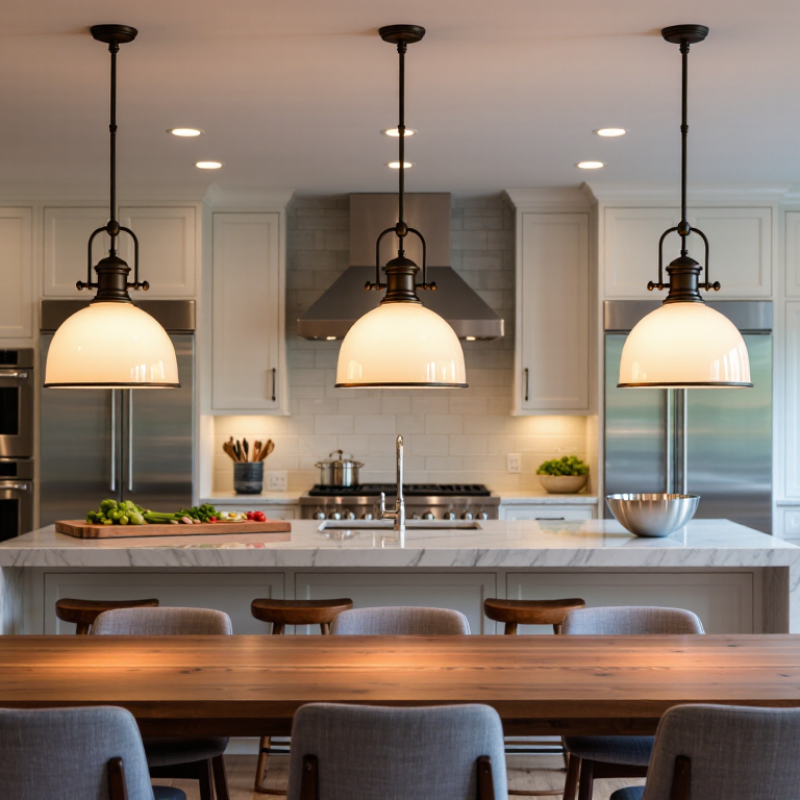
Why Choose Pendant Light Fixtures for Your Space?

Pendant Fixtures Defined: Direct, Ambient, and Accent Lighting Roles

Pendant fixtures hang from the ceiling, bringing light closer to a table, island, or reading chair. Their role depends on the shade, bulb, height, and beam direction. A downward-facing shade can concentrate light on a work surface, while an open or translucent shade spreads more light into the room. The fixture alone does not determine the effect.

For direct lighting, place a pendant over a surface where clear visibility matters. A focused beam can help with chopping vegetables or reading, but a bare bulb may create glare when viewed from a seated position. Check the light from the angles people actually use. That small test is easy to overlook. Dimming can also help shift a fixture from task lighting to a softer evening setting.

Ambient lighting is more general. Several pendants with diffusing shades can add a gentle layer, though they may not light every corner evenly. Accent lighting draws attention to a specific feature, such as textured tile or a small artwork. Aim matters. A narrow beam can make a detail stand out, but it can also leave an awkward bright spot. I would treat pendant placement as a balance, not a formula: room finishes, ceiling height, and daily habits all change how the light feels.

Light Planning: Apply IES Illuminance Criteria to Task and Ambient Layers

Pendant fixtures can make a room feel focused, but their placement should follow the work people do beneath them. Light planning begins with the task surface, not the ceiling. IES illuminance criteria offer a useful reference for selecting appropriate light levels, measured in lux or foot-candles. The target depends on the activity, visual detail, and setting; one number does not suit every room.

For a kitchen island, assess the countertop where chopping and reading recipes happen. A pendant may provide concentrated task light, while recessed or reflected light fills the surrounding space. Check illuminance at the actual work plane, then adjust fixture height, spacing, and output. Watch for glare on glossy counters and shadows from a person standing nearby. Small details matter.

Layer the light. Ambient lighting helps people move comfortably and balances brighter pools from pendants. IES guidance should inform the plan, not replace a site-specific check, since surface colors and ceiling height affect results. Dimming can help as daylight changes, though dimming alone cannot fix poor placement. It is easy to overlight an island and leave the room’s edges gloomy. Recheck after installation, when the furniture and finishes are in place.

Energy Efficiency: DOE Reports LEDs Use Up to 75% Less Energy Than Incandescents

A pendant light can focus illumination over a kitchen island, dining table, or reading corner. Its energy savings, however, depend mainly on the bulb, not the hanging fixture itself. The U.S. Department of Energy reports that LEDs use up to 75% less energy than incandescent bulbs. That can make an LED pendant a practical choice for a light used every evening.

Look at brightness before choosing a bulb. A clear label showing lumens helps you compare light output, while watts indicate energy use. For a work surface, aim the pendant so it lights the counter without shining directly into your eyes. A dimmer can help adjust brightness, but check that both the bulb and dimmer are compatible. Small details matter. A shade that blocks too much light may lead you to add another lamp, reducing the benefit. I would also consider how the fixture looks when switched off; that choice is easy to overlook. Measure the ceiling height and the area below before installation, since a low-hanging pendant can feel intrusive. The efficient option still needs to suit the room.

Placement: Follow the 30–36-Inch Island-Clearance Design Guideline

Pendant lights can define an island while putting clear, useful light over food preparation. A common placement guideline is to leave 30–36 inches between the countertop and the bottom of each fixture. Measure from the finished counter surface, not the ceiling. This range usually keeps the light close enough to work, without making it feel like an obstacle.

Treat the measurement as a starting point. Ceiling height, pendant size, and the people using the island all matter. A large shade may feel low at 30 inches, while a compact fixture can look lost when hung too high. Stand at the island and check whether the fixture blocks eye contact across the room. Then sit nearby, too. Small adjustments can change the view.

For example, a pendant above a pale stone counter may cast a sharp shadow if it sits too low or uses a narrow beam. Raise it slightly, or test a wider light distribution. With several pendants, keep their bottoms aligned and space them evenly over the island’s usable area. It can be tempting to center them by eye alone; that is not always accurate. Confirm dimensions before installation, and follow the fixture instructions. If wiring or mounting support is uncertain, ask a qualified electrician.

Specification: Compare Beam Spread, CRI, CCT, Dimming, and Safety Listings

Why Choose Pendant Light Fixtures for Your Space?

A pendant can put useful light exactly where a room needs it, but its specifications matter as much as its shape. Check the beam spread against the surface below. A narrow beam can brighten a kitchen island without lighting the whole room; a wider beam may suit a dining table. Fixture height and shade design change the result, so a specification sheet is only part of the picture.

CRI describes how accurately a light reveals colors. For food, fabrics, and skin tones, a CRI of 90 or higher can help keep colors looking natural. CCT sets the light’s appearance: around 2700K feels warm, while 4000K looks cooler and more neutral. Neither is universally better. Dimming is useful for shifting from meal prep to relaxed evenings, but confirm that the fixture and dimmer are compatible. Flicker can still disappoint. Check that safety listings apply to the complete fixture and your installation conditions, not merely one component. A little detail can be easy to miss. I’d compare the listed specifications, then view a sample in the actual room; wall colors and daylight sometimes change the impression.

Why Choose Pendant Light Fixtures for Your Space? — Specification Comparison

Pendant Type / Use Typical Beam Spread Recommended CRI Useful CCT Range Dimming Considerations Safety Listings to Verify
Focused task pendant
Kitchen island, desk, or reading area
About 25°–60° for a concentrated pool of light; the exact spread depends on the reflector, shade, and mounting height. 90 or higher for more faithful color appearance on food, materials, and work surfaces. 2700–3000 K for a warm residential look; 3000–3500 K for a more neutral task-lighting feel. Check that the LED driver and dimmer are explicitly compatible. Phase-cut dimming is common in residential fixtures; low-end performance varies by combination. Look for a recognized electrical safety certification, such as UL Listed or ETL Listed, for the applicable fixture standard. Confirm the label and installation instructions.
Opal-globe pendant
Dining nook or general ambient lighting
Broad, diffuse output, often roughly 100°–150°; an opaque or partially shaded globe can reduce light in some directions. 90 or higher when accurate color rendering is important; 80 or higher may suit general ambient use where color precision is less critical. 2700–3000 K for a warm, relaxed atmosphere; 3000–3500 K for a cleaner neutral appearance. For integrated LED models, confirm the specified dimmer type and whether flicker-free operation is stated across the intended dimming range. Verify the fixture’s safety certification and any location rating. A damp-location rating is relevant only where the installation may be exposed to moisture.
Linear pendant
Long kitchen island or conference table
Typically broad or asymmetric distribution, commonly around 90°–120°; consult an IES photometric file for the actual pattern. 90 or higher for food presentation, design work, or color-sensitive tasks. 3000 K is a common balanced choice; 3500–4000 K can suit work-focused spaces where a cooler appearance is preferred. Some fixtures use phase-cut dimming; others require 0–10 V or another control method. Match the control system to the driver before installation. Check the listing for the complete fixture and installation method. For suspended installations, follow the supplied mounting and support instructions.
Shaded downward pendant
Accent lighting over a table or counter
Often about 40°–90° downward, with limited upward light; shade shape and interior finish affect the delivered distribution. 80 or higher for general accent lighting; 90 or higher for richer, more natural color appearance. 2700–3000 K for warm residential spaces; choose a consistent CCT when combining multiple fixtures. Confirm bulb or integrated-driver dimming compatibility. With replaceable lamps, the lamp and dimmer must both support the intended dimming method. Use a fixture certified for its intended use and follow required clearances, maximum-wattage limits, and mounting instructions.

Selection note: Beam spread and light distribution are design-dependent; verify the manufacturer’s photometric data for the specific fixture. CRI, CCT, dimming performance, and safety certifications should be confirmed from the product label and documentation. Use only fixtures rated for the installation location.

FAQS

How much energy can LED bulbs save compared with incandescent bulbs?

The U.S. Department of Energy reports that LEDs use up to 75% less energy. Actual savings depend on the bulb and how often it is used.

What should I check when choosing a pendant bulb?

Compare lumens for brightness and watts for energy use. A clear label helps. I still find it easy to focus on watts alone.

How high should pendant lights hang above a kitchen island?

A common guideline is 30–36 inches from the finished countertop to the fixture’s bottom. Treat that as a starting point, not a fixed rule.

How can I tell if a pendant is positioned well?

Stand and sit near the island. Check whether the fixture blocks eye contact or shines into your eyes. Small adjustments can change the view.

What beam spread works best over an island or table?

A narrow beam can focus light on an island work surface. A wider beam may suit a dining table. Shade shape also affects the result.

What do CRI and CCT tell me about a light?

CRI describes color accuracy; 90 or higher can help food and fabrics look natural. CCT describes light appearance: around 2700K feels warm, while 4000K looks cooler.

Can pendant lights be dimmed?

Often, yes, but the bulb or fixture and dimmer must be compatible. Dimming can shift a room from meal preparation to a quieter evening mood.

What should I check before installation?

Check fixture instructions, mounting support, and safety listings for the complete fixture and installation conditions. If wiring or support is uncertain, ask a qualified electrician. A sample in the room can help, too.

Conclusion

Pendant Light Fixtures offer a flexible way to combine practical illumination with visual interest. Depending on their design and placement, they can provide focused task lighting over a kitchen island or desk, contribute to general ambient light, or highlight a particular feature as accent lighting. A thoughtful plan considers each layer and uses applicable IES illuminance criteria to help match light levels to the activities and spaces being served.

Efficiency and installation details matter too. DOE reporting indicates that LED bulbs use up to 75% less energy than incandescent bulbs, making them an efficient option for many pendant fixtures. Over an island, a common design guideline is to position the bottom of the fixture 30–36 inches above the surface, adjusting for ceiling height and sightlines. Before choosing a fixture, compare its beam spread, color rendering index (CRI), correlated color temperature (CCT), dimming compatibility, and safety listings to ensure it suits the room and intended use.

Eldric

Eldric

Eldric is a professional marketing specialist dedicated to helping customers better understand the value, quality, and practical applications of our products. With a strong background in market research, content strategy, and customer communication, he regularly contributes expert articles to our......