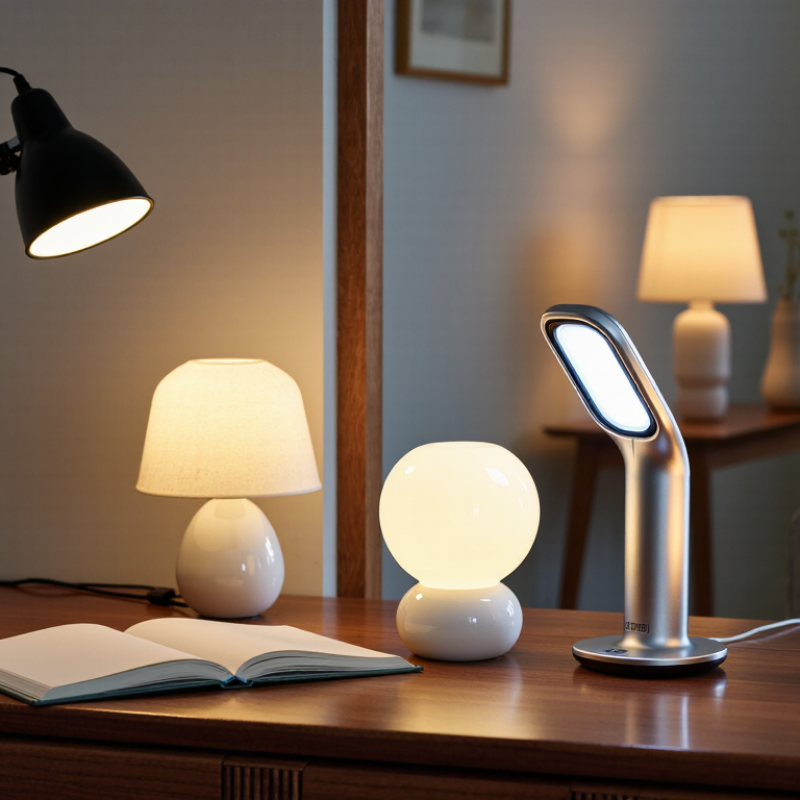
Modern Table Lamps do more than illuminate a room. They shape its mood, support daily tasks, and add a visible design detail to desks, bedside tables, and living-room consoles. The best choice depends on how you use the light. A focused task lamp helps with reading or paperwork, while a shaded accent lamp creates a softer pool of light. Adjustable-arm, sculptural, cordless, and smart lamps each solve different needs. Some look striking but are awkward to clean. That matters.
Energy performance deserves a place in the decision, too. The U.S. Department of Energy’s Energy Saver guidance reports that LED bulbs use at least 75% less energy and last up to 25 times longer than incandescent bulbs. These figures describe LED bulbs, not every lamp as a whole. Still, they make bulb compatibility, dimming support, and heat management practical points to check before buying. A beautiful lamp can disappoint if its light feels harsh or its controls are inconvenient.
This guide compares the leading modern table-lamp types by function, form, and everyday usability. It looks at task, ambient, accent, cordless, and smart designs, with attention to shade direction, brightness, materials, and placement. Think of a warm bedside glow, a narrow beam across a notebook, or a small lamp tucked onto a crowded entry table. Details change the experience. No single style suits every home, and product claims can vary, so check specifications and independent guidance before making a choice.
LED Table Lamps: DOE Reports 75% Less Energy and 25× Longer Life
Modern table lamps come in several forms, from compact bedside lights to adjustable task lamps and sculptural accent pieces. LED table lamps are especially practical where a light stays on for hours.
The U.S. Department of Energy reports that LEDs use at least 75% less energy than incandescent lamps. They can also last up to 25 times longer.
These figures compare LEDs with incandescent lighting, not every lamp type.
That difference can reduce electricity use and the hassle of frequent bulb changes. A desk lamp used each evening may benefit more than one switched on briefly. Check the lumen output for brightness, and look for a warm color temperature if the lamp will sit beside a bed. Dimming can be useful, but the lamp and control must be compatible.
Small detail, big difference.
LED performance still depends on heat management and component quality; a poorly ventilated base may shorten service life. I once assumed every LED lamp felt crisp and comfortable, but some light can seem harsh against a pale wall. Try the light in the room, if possible, before choosing.
Task Lamps: EN 12464-1 Sets a 500-lx Office-Task Benchmark
A modern task lamp should do more than look precise beside a laptop. EN 12464-1 gives 500 lx maintained illuminance as a benchmark for common office tasks such as reading, writing, and data processing. Lux measures light falling on a surface, not the lamp’s brightness rating. That distinction matters. A high-lumen bulb can still leave a notebook dim if its beam misses the work area.
Place the lamp so its light reaches the desk without reflecting off a screen or shining into your eyes. For a right-handed person, positioning it on the left often reduces hand shadows; reverse that arrangement for left-handed work. A movable head and dimmer help accommodate changing tasks, daylight, and personal comfort. Check the actual desk surface, ideally with a light meter, and consider both the lamp and room lighting. The 500-lx figure is a maintained benchmark, not a promise that one table lamp alone must supply all the light. Glare, contrast, and uneven patches can still make a workspace tiring. I’ve found that even a well-aimed lamp sometimes leaves the far edge of a large desk dull. It is worth checking again after rearranging the furniture.
Modern Table Lamps: Office Task Illuminance Benchmarks
Task lamps can provide supplementary light for detailed work. EN 12464-1 specifies maintained illuminance benchmarks for different indoor work tasks; the required level depends on the task and lighting conditions.
Values shown are maintained illuminance benchmarks in lux (lx): reception and filing, 300 lx; office reading, writing, and data processing, 500 lx; technical drawing, 750 lx. A task lamp’s output alone does not guarantee these levels across a work surface.
Smart Table Lamps: Compare App, Voice, and Wireless Controls
Smart table lamps differ less by appearance than by how they fit your routine. App control offers precise dimming, schedules, and color settings from a phone. It works well when you want a warm reading scene at 9 p.m. Voice control is quicker when your hands are full, but it depends on a compatible assistant and a stable network. Wireless buttons or remotes feel simpler. They can be easier for guests, though they may offer fewer settings. “Wireless” describes the connection, not necessarily control without internet.
The broader smart-lighting market was valued at about $20.45 billion in 2023, with a projected 22.1% annual growth rate from 2024 to 2030, according to Grand View Research’s Smart Lighting Market report. This signals growing interest, not proof that every smart lamp is useful. A small bedside lamp may need only a physical dimmer. More options can mean more setup and another app to maintain. That trade-off is easy to overlook.
Tips: Check whether a lamp keeps its last setting after a power cut. Try the controls before placing it behind a bed or bookshelf. If several people use the room, keep a manual switch within reach. Apps are flexible; a button is often faster.
Rechargeable Table Lamps: IEC 62133-2 Covers Lithium-Battery Safety
What Are the Top Types of Modern Table Lamps?
Rechargeable table lamps bring soft, movable light to desks, bedside tables, and patios. Their convenience depends on a battery that can be charged and used safely. IEC 62133-2 sets safety requirements and test methods for portable sealed lithium cells and batteries. It is relevant to the lamp’s battery, not a complete safety standard for the entire lamp. That distinction matters.
A product listing that mentions IEC 62133-2 should identify what was assessed. Check the battery documentation, test report, or certificate scope, rather than relying on a brief label alone. The lamp also needs suitable charging controls and clear instructions. Look for practical details: the recommended adapter, charging conditions, and guidance for a battery that becomes unusually hot, swollen, or damaged. Stop using it if something seems wrong.
Small details count. A lamp sitting beside a bed may charge for hours, so place it on a stable, dry surface and follow the supplied instructions. Do not cover it with fabric while charging. A safety mark can be reassuring, but it cannot replace careful use or confirm every part of the finished lamp. I would still check the documentation; product pages can leave important details unclear.
Ambient Table Lamps: Compare Warm-White Color Temperatures in Kelvin
Modern table lamps do more than fill an empty corner. A globe lamp spreads light softly, while a shaded ceramic lamp sends more light upward and downward. Slim metal designs suit small desks, but their exposed bulbs can create glare. For relaxed rooms, the bulb’s color temperature matters as much as the lamp’s shape.
Warm-white light is usually around 2,700 to 3,000 Kelvin. At 2,700K, light looks amber and cozy, like a softly lit reading nook. At 3,000K, it appears cleaner while still feeling warm. A difference of just 300K can be noticeable beside white walls or pale linen. Very warm bulbs near 2,200K may feel restful, but can make colors look unusually yellow. Check the bulb packaging, not just the lamp listing.
The shade changes the effect. A cream fabric shade softens a 2,700K bulb, while clear glass can make the same light feel brighter and sharper. Kelvin does not tell you how bright a bulb is; lumens do. For ambient light, try a dimmable bulb and test it after dark. Small detail, big mood. One caveat: wall color, shade material, and eyesight all affect perception, so the printed Kelvin rating is a useful guide, not a perfect promise.
What Are the Top Types of Modern Table Lamps? — Ambient Table Lamps: Compare Warm-White Color Temperatures in Kelvin
Common modern table-lamp styles and warm-white color temperatures for ambient lighting
| Lamp type |
Typical warm-white range |
Light character |
Ambient-light strengths |
Useful placement |
| Bedside table lamp |
2,700–3,000 K |
Soft, warm white; usually paired with a shade to diffuse the light. |
Creates a comfortable pool of light for winding down; a dimmable bulb allows lower brightness at night. |
Nightstands and bedroom side tables |
| Opal-glass globe lamp |
2,700–3,000 K |
Even, softly diffused light through translucent glass. |
Helps reduce the appearance of a bare light source and adds gentle background illumination. |
Living-room side tables, consoles, and shelves |
| Fabric-shade table lamp |
2,700 K |
Warm, softened light; the shade can tint the appearance slightly depending on its material and color. |
Provides broad, low-glare ambient light when the shade transmits light around the room. |
End tables, living rooms, and bedrooms |
| Portable rechargeable table lamp |
2,200–3,000 K, depending on the light setting |
Often adjustable; the lower end appears more amber, while the upper end looks less yellow. |
Cord-free placement and dimming can suit small areas or occasional mood lighting. |
Dining tables, patios, shelves, and rooms without a nearby outlet |
| Sculptural or integrated-LED table lamp |
2,700–3,000 K when specified as warm white |
Varies with the LED design; indirect or reflected light can appear softer than a directly visible source. |
Can function as a decorative focal point while adding localized ambient light. |
Consoles, side tables, and accent surfaces |
| Small shaded accent lamp |
2,200–2,700 K |
Very warm to warm white, creating a cozy accent rather than strong room-wide illumination. |
Adds a small layer of light and can balance brighter ceiling or task lighting. |
Bookshelves, narrow consoles, and occasional tables |
Note: Color temperature is a property of the bulb or integrated LED, not the lamp style itself. Kelvin values are approximate; lower values look warmer and more amber, while higher values within the warm-white range look less yellow. Brightness and the shade or diffuser also affect the perceived ambience.
Conclusion
Modern Table Lamps combine practical lighting with energy efficiency and flexible features. LED models can use substantially less energy and last much longer than traditional bulbs; the outline notes DOE figures of up to 75% less energy use and 25 times the lifespan. For focused work, task lamps should provide clear, well-directed light, with 500 lux serving as a useful office-task benchmark under EN 12464-1.
Different types suit different routines. Smart table lamps offer app, voice, or wireless controls, while rechargeable models provide portable illumination and call for attention to lithium-battery safety, including the considerations covered by IEC 62133-2. Ambient lamps create a softer atmosphere, and comparing warm-white color temperatures in Kelvin can help match the light to a room’s mood and purpose. Choosing among these options depends on whether efficiency, focused visibility, convenient control, portability, or comfortable ambient light matters most.