In 2026, crystal chandeliers are less about one grand, glittering style and more about choosing the right shape for a room. A tiered traditional fixture can bring ceremony to a high-ceilinged dining room. A slim linear chandelier may suit a kitchen island, while a compact flush mount can add sparkle without crowding a lower ceiling. The categories overlap, though. That can make shopping confusing.
Interior designer William Morris offered a useful principle: “Have nothing in your houses that you do not know to be useful, or believe to be beautiful.” For Crystal Chandeliers, both parts matter. Look at the fixture in daylight, then imagine it glowing at night. Notice how its crystals scatter light across the walls, and check whether the frame feels balanced above the table. Small details count.
A guide to the top types should compare classic, modern, empire, linear, and sculptural designs, alongside colored-crystal and flush-mount options. It should also explain scale, finish, and placement, not just appearance. A sparkling product photo cannot show how a fixture feels in a real home. That part takes judgment. And sometimes, a chandelier that looks perfect online feels too busy in person. The best choice may be quieter than expected.
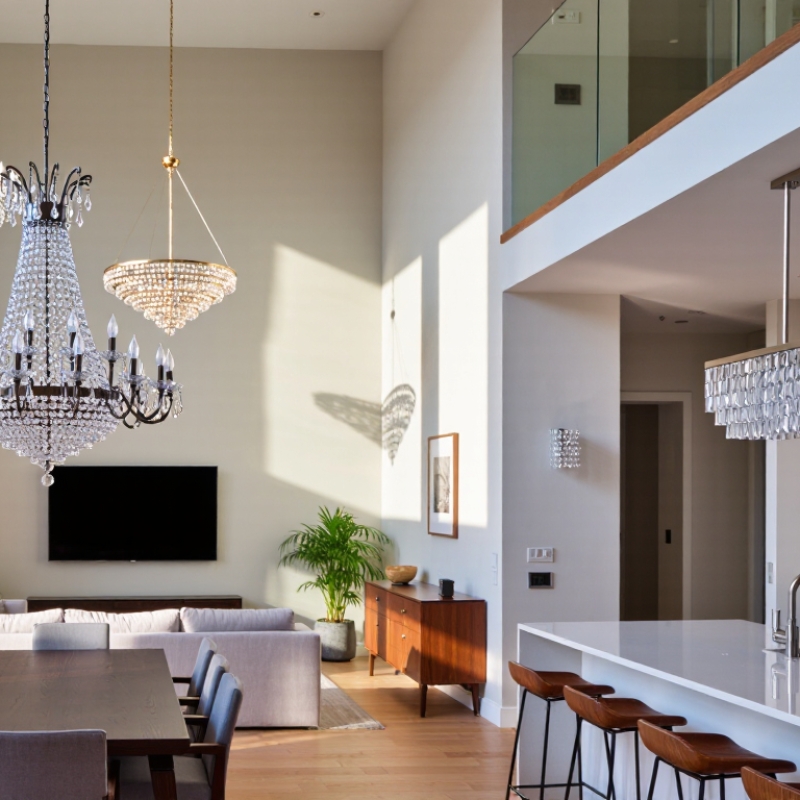
How Crystal Chandeliers Are Classified
Crystal chandeliers are best classified by form, mounting, construction, and light distribution. Shape names describe appearance: tiered fixtures stack rings of glass drops, empire styles widen toward the bottom, and linear designs stretch above long tables. Mounting creates another group: suspended, semi-flush, or flush. These labels overlap. A tiered chandelier can also be a pendant. That distinction matters.
Material and lighting technology add useful detail. Cut-glass, molded-glass, and crystal-style acrylic fixtures differ in weight, sparkle, and cleaning needs; check the ceiling support before choosing a heavy model. The U.S. Energy Information Administration’s 2020 Residential Energy Consumption Survey found LEDs made up 47% of bulbs in U.S. homes. The U.S. Department of Energy’s 2022 lighting market analysis also documented LED adoption across installed lighting. So, classify the light source too: replaceable bulbs and integrated LEDs affect maintenance and future upgrades. Check the ceiling. Finally, note whether light travels upward, downward, or in both directions. Catalog categories can be inconsistent, so dimensions, bulb access, and actual light output are more dependable than a style label alone.
The Main Crystal Chandelier Types in 2026
The main crystal chandelier types in 2026 range from traditional tiered fixtures to compact, sculptural designs. Tiered chandeliers suit rooms with high ceilings, where multiple rings of cut glass can catch light above a dining table. Linear styles spread that sparkle across long tables or kitchen islands.
Measure carefully: an oversized fixture can crowd a room, even when its crystals are beautiful.
Modern designs often mix crystal with metal frames, clean lines, or asymmetrical clusters. Flush and semi-flush chandeliers work better in lower-ceiling spaces, while mini chandeliers bring detail to bedrooms and entryways.
Still, scale matters. A small fixture may disappear in a wide room. Crystal also varies in clarity, cut, and weight, so inspect samples under warm and cool lighting before choosing.
Energy use is part of the 2026 conversation.
Grand View Research valued the global lighting market at USD 118.4 billion in 2022 and projected a 6.5% compound annual growth rate through 2030. That broader market figure does not measure chandeliers alone, but it reflects continued demand for lighting choices.
Pairing a crystal fixture with compatible LED bulbs can reduce energy use; the U.S. Department of Energy says LEDs use at least 75% less energy than incandescent lighting. Check dimmer compatibility, too.
Small details matter.
How Frame Shapes and Crystal Cuts Affect Their Appearance
Frame shape decides how a crystal chandelier occupies a room. A broad ring spreads visual weight and suits a long dining table. A narrow vertical frame draws the eye upward in a stairwell. Linear frames create a crisp silhouette, while curved arms soften hard architectural lines. Check the fixture from seated eye level, too. A beautiful outline can still block sightlines.
Crystal cuts control how light breaks across that frame. Faceted drops produce sharp flashes; smoother, rounded pieces give a quieter glow. Prisms near the outer edge catch side light, while dense layers create deeper shadows. The U.S. Department of Energy’s Energy Saver guide reports that LEDs use at least 75% less energy and last up to 25 times longer than incandescent bulbs. That matters for fixtures with many lamps, though bulb color and dimming still change the crystals’ appearance.
Scale and cut must work together. Large pendants can overwhelm a delicate frame, while tiny crystals may disappear on a wide one. Hold a sample near the intended bulb, if possible. Warm light can make clear crystal feel softer; cooler light may sharpen its sparkle. One easy mistake: choosing by showroom brilliance alone. At home, ceiling height, wall color, and daylight all alter the effect. The result is rarely as dramatic—or as predictable—as the display suggests.
What Are the Top Crystal Chandelier Types in 2026? — How Frame Shapes and Crystal Cuts Affect Their Appearance
Representative refractive index of chandelier crystal materials (dimensionless; values are approximate near 589 nm).
Refractive index affects how strongly light bends inside a material. Crystal cuts and facet angles influence how that light is redirected and sparkles, while frame shapes—such as round, tiered, or linear designs—change how the crystals are arranged and how widely the light is distributed. These material values are optical references, not a ranking of chandelier styles.
Where Different Chandelier Types Work Best
Crystal chandeliers work best when their shape suits a room’s proportions and daily use. A multi-tier design makes a striking focal point in a tall foyer or formal dining room, where open space lets its crystals catch the light. In a smaller room, the same fixture may feel crowded. It happens.
Linear crystal chandeliers suit long dining tables and kitchen islands because their shape follows the furniture. Choose a length that leaves visible table space at both ends, and check that seated guests will not look directly into the bulbs. Flush or semi-flush styles are often better for low ceilings, hallways, and compact bedrooms. Their close profile adds sparkle without making the ceiling feel lower. A drum-shaped fixture can soften a modern living room or bedroom, especially when its shade diffuses glare. Scale is easy to misjudge in photos, so compare the fixture’s width with the room and table before choosing.
Tips: Measure ceiling height and table width first. Leave comfortable headroom in walkways. Dimmable lamps can help reduce sharp reflections at night, where compatible. Mock up the fixture’s diameter with paper before installation; the fit can still surprise you.
How to Compare Crystal Chandelier Types for Your Space
What Are the Top Crystal Chandelier Types in 2026?
Start with ceiling height, room size, and the furniture below the fixture. Flush-mount chandeliers suit low ceilings, while semi-flush designs add more visual depth without hanging far down. They work well in compact entryways. Tiered chandeliers create a stronger focal point in rooms with generous ceiling height, but can overwhelm a small dining area. Linear styles spread light along a rectangular table; drum-shaped designs soften the sparkle with a fabric or metal shade. Above a dining table, measure from the tabletop, not the floor. A common guide is 30 to 36 inches of clearance, adjusted for ceiling height and sightlines.
Crystal clarity and cut affect how light scatters, so compare samples under your actual bulbs if possible. A showroom’s bright lighting can make crystals look more brilliant than they will at home. Dimmers help control glare and evening mood, but check that both the bulbs and dimmer are compatible. The U.S. Department of Energy’s LED Lighting guidance reports that LEDs use at least 75% less energy and last up to 25 times longer than incandescent bulbs. That makes bulb choice relevant when comparing ornate, multi-lamp fixtures. Still, efficiency alone cannot tell you whether a chandelier will feel comfortable; test its brightness against wall colors, ceiling height, and nearby windows.
Conclusion
This guide explains how Crystal Chandeliers can be classified by their construction, frame shape, crystal arrangement, and overall style. It explores popular types in 2026, from traditional designs with layered drops to sleek, modern fixtures with clean lines and carefully placed crystals. The shape of a chandelier and the cut of its crystals both influence how it reflects light, feels in a room, and fits with surrounding decor.
Choosing the right type also depends on where the chandelier will hang. A spacious entryway may suit a larger, more dramatic fixture, while a dining area or bedroom may benefit from a design scaled to the room and its furnishings. By comparing size, proportions, lighting effect, ceiling height, and interior style, readers can narrow down their options and select a chandelier that feels balanced, practical, and visually at home in their space.