
0%

Small rooms do not need to feel plain. Mini Chandeliers can add a focal point above a breakfast table, brighten a narrow entry, or bring a little sparkle to a compact bedroom. Their smaller scale helps preserve visual breathing room, but “mini” does not automatically mean suitable. A low ceiling, wide shade, or overly ornate frame can still make a room feel crowded.

Light output matters as much as appearance. The U.S. Department of Energy’s Energy Saver guidance reports that LED bulbs use at least 75% less energy and last up to 25 times longer than incandescent bulbs. That makes an LED-compatible mini chandelier a practical option for frequently used spaces. Check the fixture’s bulb specifications, dimmer compatibility, and stated light output before buying. A pretty fixture that leaves the kitchen counter dim is not a great solution.

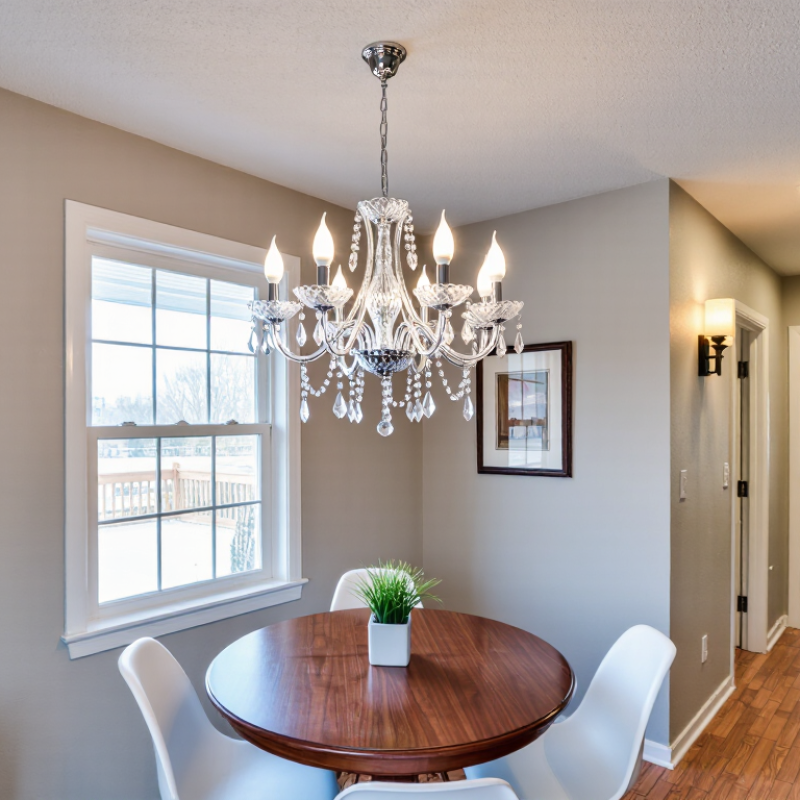
Scale matters. Measure the room, table, and ceiling height, then compare those dimensions with the fixture’s listed size. In a small dining nook, a compact chandelier centered over the table can define the area without blocking sightlines. In a hallway, a flush or semi-flush design may be safer than a hanging model. Pairing it with recessed or wall lighting can reduce harsh shadows. This is where the choice gets personal: one small chandelier may feel charming, while another may simply look undersized. The best fit balances proportion, useful light, and the room’s everyday needs.
Why Choose Mini Chandeliers for Small Spaces?

What Defines a Mini Chandelier?

A mini chandelier is a compact decorative ceiling light, often made with several arms, bulbs, or hanging accents. Its defining feature is not a fixed measurement. There is no universal size that makes a chandelier “mini”; dimensions vary by design and maker. The label usually describes a fixture with a smaller visual and physical footprint than a standard chandelier.

That distinction matters. A small fixture can still feel ornate, with curved metal arms, glass droplets, or a layered silhouette. Others use simple lines and just a few exposed bulbs. Look at the fixture’s full width and height, not only its shade or central body. A narrow light may hang low, while a wider one can spread across a compact dining table.

For a real sense of scale, compare the fixture with nearby features. Over a two-seat breakfast table, a broad crystal design may feel crowded, even if it is sold as mini. In a low-ceiling hallway, hanging parts can also interfere with movement. Measure the available space and check the listed clearance before choosing. I would not rely on the word “mini” alone; it is a useful starting point, not a promise of fit.

Why Choose Mini Chandeliers for Small Spaces?

A mini chandelier is a compact decorative light; there is no single industry-wide size cutoff. For a useful starting point, a common sizing rule estimates chandelier diameter in inches by adding a room’s length and width in feet.

How to read the chart: The diameter estimates are calculated from the room dimensions shown. Treat them as a rule of thumb, then consider ceiling height, furniture, and the fixture’s proportions when choosing a mini chandelier.

How Do Mini Chandeliers Fit Small Spaces?

Why Choose Mini Chandeliers for Small Spaces?

How Do Mini Chandeliers Fit Small Spaces?

A mini chandelier adds a focal point without overwhelming a compact room. Its smaller frame can work above a round breakfast table, in a narrow entry, or over a bedside table. Measure the furniture and ceiling before choosing; a fixture that looks delicate online may feel crowded in person. Keep enough open space around it for the room to breathe.

Scale matters, but so does light quality. In a low-ceilinged room, a close-to-ceiling mini chandelier can preserve headroom while adding visual detail. In a tight dining nook, position the fixture over the table rather than in the room’s walking path. Choose bulbs that suit the task and dim when needed. The U.S. Department of Energy reports that LEDs use at least 75% less energy and last up to 25 times longer than incandescent lighting. That can make frequent evening use more practical.

Tips: Tape the fixture’s proposed width on the ceiling before buying. Check the view from the doorway, too. A modest fixture can still feel too large when it blocks sightlines. I’d also compare the shade and finish against nearby surfaces; matching everything can look a little flat, and that is easy to overlook.

What Lighting and Decorative Benefits Do They Offer?

Why Choose Mini Chandeliers for Small Spaces?

What Lighting and Decorative Benefits Do They Offer?

A mini chandelier can add a clear focal point without taking over a compact room. Its clustered bulbs spread light across a small dining nook, entryway, or bedroom. Choose a shape that leaves sightlines open, such as a compact frame with slim arms. Glass shades can feel airy, while fabric shades soften the glow. Details matter. A warm bulb can make pale walls feel inviting, but an overly bright one may create glare on nearby surfaces.

These fixtures also bring decorative character where floor and wall space are limited. A small brass-toned light above a round table can echo cabinet handles or picture frames. In a narrow entry, a modest fixture can make the ceiling feel considered rather than bare. Measure the fixture against the room and check how low it hangs before buying. It should not obstruct movement or views. A dimmer can help shift the mood, if the bulbs and wiring support one. A tiny chandelier can still feel wrong when its silhouette is too ornate or its light pools unevenly. Sometimes a simpler design works better.

Which Rooms and Locations Suit Mini Chandeliers?

Mini chandeliers suit rooms where a standard fixture may feel visually heavy, yet a simple ceiling light seems too plain. They work well over a small dining table, breakfast nook, or compact kitchen island. Center the fixture over the surface, not merely in the middle of the room. That small adjustment makes the light feel intentional. Keep it modest.

In bedrooms, a mini chandelier can add gentle character above the foot of the bed or near a reading chair. Check the ceiling height and nearby doors before choosing a hanging style. A low ceiling may call for a close-to-ceiling design. In a powder room, a small fixture can bring warmth, but keep it away from splash zones and follow the fixture’s safety rating for the location.

Entryways, narrow hallways, and walk-in closets can also suit mini chandeliers, especially where a broad fixture would obstruct sightlines. Measure the available clearance, including the fixture’s lowest point. In a hallway, one well-placed light often feels calmer than several competing focal points. Still, a mini chandelier may look lost in a large, open room. I have found that scale is easy to misjudge from a product photo, so compare its dimensions with the furniture and ceiling before buying.

Why Choose Mini Chandeliers for Small Spaces? - Which Rooms and Locations Suit Mini Chandeliers?

Room or Location Why a Mini Chandelier Can Suit It Placement Guidance Key Measurement to Check Practical Considerations
Small Entryway or Foyer Adds a decorative focal point without taking up floor or wall space. Center it in the area where people walk through, rather than directly over a door that swings open. Allow at least 7 feet of clearance from the floor to the bottom of the fixture in a standard walking area. For a low ceiling, choose a compact, close-to-ceiling design or a model with a short adjustable stem.
Powder Room Provides a decorative accent in a room where a full-size chandelier may feel oversized. Place it near the room’s visual center, while keeping it clear of doors and cabinet openings. Check ceiling height and the fixture’s overall drop before installation. Use a fixture rated for the room’s conditions and follow local electrical and bathroom safety requirements.
Breakfast Nook Defines a small dining area and brings focused light over the table. Center the chandelier over the table, not necessarily over the entire room. For a fixture over a table, a common starting point is 30–36 inches from the tabletop to the bottom of the fixture; adjust for the room and sightlines. Choose a diameter that leaves the table’s edges visually clear and does not obstruct conversation.
Small Dining Area Can provide a clear centerpiece while keeping the scale appropriate for a compact table. Align the fixture with the table’s center and check that it remains centered when the table is extended, if applicable. Compare fixture width with table width; leave visible space between the fixture and the table edges. Consider a dimmable, compatible light source for meals and everyday use.
Walk-In Closet or Dressing Area Adds ambient light and decorative detail in a room with limited floor area. Position it where it will not conflict with shelves, closet doors, or hanging clothes. Measure the ceiling height and the clearance beneath the fixture, especially above walkways. Confirm that the fixture is suitable for the installation location and does not obstruct access to storage.
Small Bedroom Offers a compact alternative to a large central pendant and can complement bedside lighting. Place it over an open floor area or at the room’s center, clear of wardrobes and tall furniture. Check the fixture’s diameter and hanging height against the room size and ceiling height. A low-profile design can be more practical in rooms with low ceilings or raised furniture.
Kitchen Island or Peninsula A pair or small group can provide task lighting and visual interest without dominating a narrow work surface. Space multiple fixtures evenly over the usable counter area and avoid blocking key sightlines. Measure the island length, fixture diameter, and distance from the countertop to the fixture bottom. Choose a cleanable design and ensure the lighting provides useful illumination for food preparation.
Reading or Sitting Nook Creates a defined feature above a small seating area without requiring a large ceiling fixture. Center it over the nook, while keeping it outside the path of movement and clear of tall chair backs. Check seated sightlines as well as standing clearance. Use it as ambient lighting; add a suitable task light if the nook is used for reading.

Selection tip: Mini chandeliers are generally best for compact rooms, small tables, or defined zones. Measure the room, table or island, ceiling height, and required clearance before choosing a fixture; installation requirements vary by fixture and local code.

How Should You Choose and Install One?

Why Choose Mini Chandeliers for Small Spaces?

How Should You Choose and Install One?

Measure the room before choosing a mini chandelier. A compact fixture should add light without crowding the ceiling or competing with nearby shelves. Note the room’s length, width, ceiling height, and furniture layout. In a narrow entryway, a small, simple silhouette often feels calmer than a cluster of decorative arms. Check the fixture’s dimensions, not just its product photo; a chandelier that looks petite online can feel busy in person.

Plan the hanging height around how people use the space. Over a dining table, leave roughly 30 to 36 inches between the tabletop and the fixture. In a walkway, keep the lowest point high enough for safe clearance, following the fixture instructions and applicable local guidance. Turn off power at the breaker before installation. If wiring, ceiling support, or a sloped ceiling is uncertain, ask a qualified electrician. Small fixtures still need secure mounting.

Tips: Measure twice. Mark the proposed position with painter’s tape, then view it from the doorway and seated eye level. Choose a dimmable bulb only if the fixture supports one. A slightly off-center placement may look fine on paper, but it can bother you every evening.

FAQS

Why choose a mini chandelier for a small room?

It adds a focal point without taking over the room. Try one above a round breakfast table or bedside table.

How can I check whether the fixture will fit?

Measure the ceiling, furniture, and fixture dimensions. Tape its proposed width on the ceiling and view it from the doorway. Measure twice.

Which style works best in a narrow entryway?

A simple frame with slim arms can keep sightlines open. An ornate shape may feel crowded, even when the fixture is small.

What kind of light does a mini chandelier provide?

Clustered bulbs can spread light across a dining nook or bedroom. Warm bulbs soften pale walls, but overly bright ones may cause glare.

Can a mini chandelier make a room feel more decorative?

Yes. A small brass-toned fixture can echo nearby cabinet handles or picture frames. Matching every finish, though, can look a little flat.

How low should a fixture hang above a dining table?

Leave roughly 30 to 36 inches between the tabletop and fixture. Check the fixture instructions and make sure it does not block views.

What should I consider in a room with a low ceiling?

A close-to-ceiling design can preserve headroom while adding detail. Check its lowest point before buying.

What should I know before installation?

Turn off power at the breaker. If wiring or ceiling support is uncertain, ask a qualified electrician. Small fixtures still need secure mounting.

Conclusion

Mini Chandeliers are compact ceiling fixtures designed to bring the elegance and sparkle of a traditional chandelier to rooms with limited space. Their smaller scale helps them add visual interest without overwhelming low ceilings or crowded layouts. They can provide useful ambient light while also acting as decorative focal points, making a room feel more polished and welcoming.

These fixtures can suit entryways, bedrooms, small dining areas, bathrooms, and cozy living spaces, depending on the room’s layout and lighting needs. When choosing one, consider its dimensions, ceiling height, light output, style, and how it will complement nearby furniture and finishes. Before installation, check that the fixture is positioned safely and provides enough clearance for people and doors. A well-chosen Mini Chandelier can balance practical illumination with charm, even in a compact room.

Eldric

Eldric

Eldric is a professional marketing specialist dedicated to helping customers better understand the value, quality, and practical applications of our products. With a strong background in market research, content strategy, and customer communication, he regularly contributes expert articles to our......