
0%

Choosing Residential Lighting Fixtures is not simply a matter of matching finishes to furniture. Light affects safety, comfort, mood, and how large a room feels.

A warm pendant above a wooden dining table can create intimacy, while recessed lights may provide cleaner task lighting. In a hallway, even illumination helps prevent trips and harsh shadows. Kitchens need layered light: ceiling fixtures, under-cabinet strips, and focused lighting near preparation areas. Bathrooms require careful placement around mirrors and wet locations. Small details matter.

The best choice begins with the room’s purpose, ceiling height, natural daylight, and daily habits. Measure the space before shopping. Check bulb compatibility, color temperature, brightness, dimming performance, and energy efficiency. Product labels can be confusing, and attractive fixtures sometimes produce disappointing light. That is worth admitting.

A reliable selection should also consider installation quality. Fixtures must suit the electrical box, mounting surface, and applicable local safety requirements. When wiring is unfamiliar, a qualified electrician should inspect or complete the work. Manufacturer instructions and recognized certification marks provide useful evidence, but they do not replace professional judgment. I have seen rooms with beautiful fixtures that still felt uncomfortable because the light was too blue or poorly aimed. Good design is partly technical and partly observational. Stand beneath the fixture at night. Notice glare. Notice shadows. Then decide.

This guide explains how to compare Residential Lighting Fixtures with practical criteria, realistic expectations, and room-specific examples. Some choices will remain subjective. That is normal.
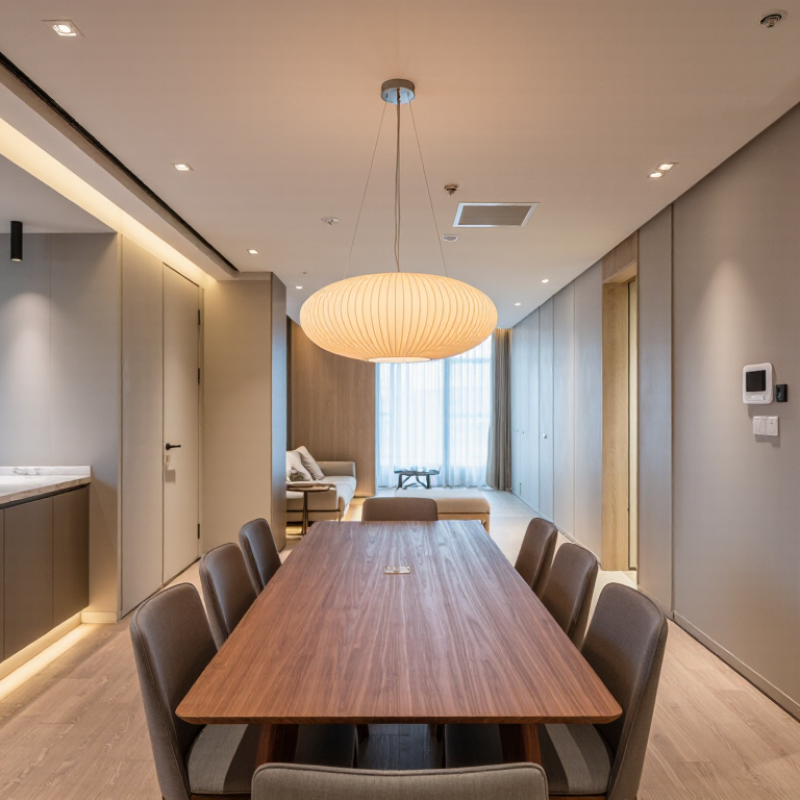
How to Choose Residential Lighting Fixtures?

Define Your Lighting Needs and Room Functions

Choosing residential lighting fixtures starts with the room’s function, not its appearance. A kitchen needs clear task lighting for chopping and reading labels. A bedroom needs softer light for winding down. Hallways require safe, even illumination rather than strong brightness. Ask what people do there, when they use the room, and where shadows appear.

Layer the plan with ambient, task, and accent lighting. In a kitchen, combine ceiling fixtures with under-cabinet lights. In a study, place a directional fixture beside the work surface. The U.S. Department of Energy reports that LED lighting can use up to 90% less energy and last up to 25 times longer than incandescent lighting. That matters in rooms used every day. However, lower energy use does not fix poor placement. A bright fixture can still create glare.

Consider color temperature, dimming, and control habits before selecting the fixture. Warmer light often suits bedrooms and dining areas. Neutral white can support kitchens, bathrooms, and home offices. The International Energy Agency’s Energy Efficiency 2023 report identifies buildings as responsible for roughly 30% of global final energy use. Small lighting decisions can therefore influence long-term consumption. I have seen homeowners choose fixtures by size alone. That mistake is common. Measure the room, check ceiling height, and review the bulb’s lumen output. A fixture that looks perfect in a showroom may feel harsh above a dining table. Test the light at night, when its real effect becomes obvious.

Compare Fixture Types for Different Residential Spaces

How to Choose Residential Lighting Fixtures?

Compare Fixture Types for Different Residential Spaces

Residential lighting works best when each fixture matches the room’s daily behavior. In a kitchen, recessed downlights provide broad task lighting over worktops. Under-cabinet strips reduce shadows near sinks and chopping areas. A small pendant above an island adds focus, but its height needs careful adjustment. Too low, and it interrupts conversation. Too high, and the island feels poorly lit.

Living rooms need flexibility rather than one bright ceiling fixture. Use a central flush mount for general illumination, then add floor lamps beside seating. Wall sconces can soften empty surfaces and create comfortable evening light. Dimmable fixtures are valuable here. However, glare from exposed bulbs can quickly become tiring, especially beside televisions. I have found that warm light feels inviting, but very warm light may weaken color accuracy when reading.

Bedrooms usually benefit from layered, low-glare lighting. Bedside sconces free table space and make nighttime reading easier. A compact ceiling fixture can provide gentle ambient light. Bathrooms require moisture-rated fixtures in suitable locations, with clear illumination around the mirror. Check the fixture’s safety rating and follow local electrical requirements. Hallways often need simple ceiling lights or recessed fixtures, spaced evenly to prevent dark patches. Measure the room before buying. Furniture changes can expose weaknesses in an otherwise attractive plan. Conversation with a qualified electrician is worthwhile when wiring, load limits, or fixture placement seems uncertain.

Evaluate Brightness, Color Temperature, and Light Quality

How to Choose Residential Lighting Fixtures?

Brightness should match the room’s task, size, and surface colors. Lumens measure light output, while watts measure energy use. They are not interchangeable. A reading corner may need a focused fixture near 450 lumens. A kitchen workspace often needs stronger, layered illumination. I prefer combining ceiling, task, and accent lighting instead of relying on one bright source. It reduces harsh shadows. It also makes the room feel less flat.

Color temperature changes the room’s emotional tone. Warm white, around 2700K to 3000K, suits bedrooms and living areas. Neutral white, near 3500K to 4000K, can support kitchens, bathrooms, and home offices. Avoid mixing noticeably different temperatures in one sightline. The result can look accidental. I once installed a cooler lamp beside a warm pendant, and the mismatch was distracting at night.

Light quality deserves equal attention. Look for a high color rendering index, ideally 90 or above, especially where people choose clothing or prepare food. Check whether the fixture produces visible flicker, uncomfortable glare, or dark edges. Frosted diffusers can soften glare, but they may reduce output. Dimming compatibility matters too. Specifications can appear complete, yet real performance may disappoint. Test the fixture at several brightness levels before final installation.

Select Suitable Sizes, Styles, Materials, and Finishes

How to Choose Residential Lighting Fixtures?

Choosing residential lighting starts with proportion, not a catalog image. I measure the room, furniture, ceiling height, and viewing angles first. For dining areas, a practical rule adds the room’s length and width in feet, then converts that number to inches for fixture diameter. A 10-by-12-foot room suits a fixture near 22 inches wide. Keep at least 30–36 inches between the tabletop and pendant bottom. Too low, and conversation feels boxed in. Too high, and the light loses intimacy.

Style should support the room’s architecture, while materials should suit daily use. Glass spreads light softly but shows fingerprints. Metal handles heat well and cleans easily. Wood introduces warmth, yet its finish can discolor near cooking areas. Matte surfaces hide glare better than polished ones, although they may collect dust.

The U.S. Department of Energy reports that LED lighting uses at least 75% less energy and lasts up to 25 times longer than incandescent lighting.

Efficient performance matters, but color quality matters too. I usually specify 2700–3000K for living spaces and higher color rendering for kitchens or dressing areas.

Finishes need a deliberate relationship with hardware, flooring, and wall color. Matching everything can look flat. A restrained contrast often feels more considered. I have occasionally chosen a beautiful oversized fixture and regretted it after installation. Scale is unforgiving.

The International Energy Agency’s energy-efficiency research also identifies efficient lighting as a major electricity-saving opportunity, so fixture selection should balance appearance, light distribution, maintenance, and long-term operating cost.

Check Installation Requirements, Efficiency, and Safety Standards

How to Choose Residential Lighting Fixtures?

Start with the installation requirements, not the appearance. Check the ceiling box rating, wiring condition, fixture weight, and available clearance. Recessed fixtures need correct housing and insulation contact ratings. Damp bathrooms and covered outdoor areas require fixtures marked for damp or wet locations. A practical mistake is assuming “indoor” means suitable everywhere. It does not.

Efficiency affects both operating cost and heat. The U.S. Department of Energy reports that modern LED lighting can deliver substantially higher efficacy than traditional incandescent sources. ENERGY STAR data also states that certified LED bulbs use at least 75% less energy and last up to 25 times longer than incandescent bulbs. Compare lumens, not watts. A 900-lumen fixture may feel bright, even with modest power use. Check color temperature too. Warm white around 2700–3000K usually suits bedrooms and living rooms.

Safety standards deserve equal attention. Look for recognized testing marks and installation instructions, then verify compatibility with dimmers and smart controls. UL 1598 covers many luminaires, while IEC 60598 addresses general luminaire safety requirements. Local electrical rules may add grounding, junction-box, or bathroom-zone requirements. Do not hide loose connections above a ceiling. That shortcut can create heat and future failure. No checklist catches every problem. When uncertain, ask a qualified electrician to inspect the circuit before installation.

How to Choose Residential Lighting Fixtures? - Check Installation Requirements, Efficiency, and Safety Standards

Fixture Type Typical Residential Use Common Installation Requirements Typical Power Range Typical LED Efficacy Recommended Color Temperature Safety and Compliance Considerations
Flush-Mount Ceiling Fixture Bedrooms, hallways, kitchens, and general living areas Requires a suitable ceiling junction box; secure the mounting bracket to the box or structural support; connect grounding conductor where provided 10–30 W for integrated LED models 80–120 lm/W 2700–3000 K for living spaces; 3500–4000 K for utility areas Use a fixture rated for the ceiling-box load; verify dimmer compatibility and thermal protection for enclosed designs
Recessed Downlight General lighting, kitchens, corridors, and bathrooms Check ceiling depth, joist spacing, IC suitability for insulation contact, and access to the electrical supply; use an approved junction box or driver enclosure 8–20 W 80–110 lm/W 2700–3000 K for rooms; 3500–4000 K for task areas Select IC-rated products where insulation contacts the housing; use damp-location-rated models in bathrooms; avoid covering required heat-dissipation areas
Pendant Light Dining tables, kitchen islands, foyers, and reading areas Requires a properly supported ceiling outlet box; support heavier fixtures independently of drywall; maintain safe clearance from combustible surfaces 6–25 W for LED models 80–115 lm/W 2700–3000 K for dining and living spaces Confirm box load rating, cord or chain condition, grounding, and minimum head clearance; use damp-rated versions only where permitted by the installation location
Wall Sconce Bedrooms, stairways, corridors, living rooms, and accent lighting Mount to a wall junction box or approved fixture-support box; route wiring inside the wall; maintain clearance from curtains and other combustible materials 5–18 W 80–115 lm/W 2700–3000 K Use damp-location-rated fixtures near bathroom sinks when required; verify mounting stability and protection from accidental contact
Bathroom Vanity Fixture Mirror and face-lighting applications in bathrooms Install on an appropriate wall box; position to reduce shadows; follow local wet or damp location requirements and maintain separation from direct water exposure 10–30 W 80–110 lm/W 3000–4000 K; color rendering index of 80 or higher is generally suitable Choose a damp-location-rated fixture where applicable; use ground-fault protection for receptacles and circuits where required by local electrical rules
Under-Cabinet Light Kitchen worktops, shelving, and task lighting Provide a suitable power connection; conceal or protect wiring; allow ventilation around drivers and maintain clearance from heat-producing appliances 3–15 W per metre for LED strip systems 80–120 lm/W 3000–4000 K Use a low-voltage system with a correctly sized driver; protect connections from moisture, grease, and mechanical damage; check polarity and dimming compatibility
Track Lighting Flexible accent and directional lighting in living areas or galleries Use a listed track system with compatible heads; anchor the track to a junction box or structural support; do not exceed the track’s rated load 5–15 W per LED head 80–110 lm/W 2700–3500 K Maintain required clearance from combustible materials; verify circuit capacity, grounding continuity, and compatibility between track and heads
Outdoor Wall or Entry Fixture Porches, entrances, garages, and exterior walkways Use an exterior-rated junction box and weatherproof mounting surface; seal the backplate as required; provide weather-resistant cable entries 8–25 W 70–110 lm/W 2700–4000 K Use a fixture specifically marked for damp or wet locations; select an IP rating suitable for exposure, such as IP44 for sheltered areas or IP65 for more direct water exposure

Note: Actual requirements depend on local electrical codes, the building structure, the fixture’s installation instructions, and the environmental conditions. A qualified electrician should verify wiring, grounding, circuit protection, and load capacity before installation.

FAQS

How bright should a residential light fixture be?

Choose brightness by room size, task, and wall color. A reading corner may need about 450 lumens. Kitchen workspaces often need more layered light.

What is the difference between lumens and watts?

Lumens measure light output. Watts measure energy use. They are not interchangeable. Compare lumens when choosing brightness.

Why combine ceiling, task, and accent lighting?

Multiple light sources reduce harsh shadows. They also add depth to the room. One bright ceiling fixture can feel flat.

Which color temperature suits bedrooms and living rooms?

Warm white, around 2700K to 3000K, usually feels comfortable. It creates a softer evening atmosphere. The result may still depend on wall colors.

What color temperature works well in kitchens and home offices?

Neutral white, near 3500K to 4000K, can support detailed tasks. Avoid mixing very different temperatures within one sightline. It can look accidental.

How can I judge light quality before installation?

Check color rendering, glare, dark edges, and visible flicker. A color rendering value near 90 or higher helps food and clothing look more natural. Test the fixture at several brightness levels.

What installation details should I check first?

Check the ceiling box, wiring, fixture weight, and available clearance. Recessed fixtures need suitable housing and insulation ratings. Do not assume an indoor fixture suits a damp bathroom.

How can lighting efficiency affect household costs?

Efficient light sources use less energy and produce less heat. Compare lumens with power consumption. A 900-lumen fixture may provide strong light with modest energy use.

What safety checks matter before installing a fixture?

Look for recognized testing marks and clear installation instructions. Confirm dimmer and smart-control compatibility. Loose connections should never be hidden above a ceiling.

When should I ask an electrician for help?

Ask for help when wiring, grounding, junction boxes, or bathroom zones seem unclear. Small mistakes can cause heat or later failure. Check twice.

Conclusion

Choosing the right Residential Lighting Fixtures begins with understanding the purpose of each room and the type of atmosphere you want to create. Consider whether the space needs focused task lighting, comfortable ambient illumination, or decorative accent lighting, then compare suitable fixture types for kitchens, bedrooms, living areas, bathrooms, hallways, and outdoor spaces. Brightness, color temperature, and light quality should match the room’s function while supporting comfort and visibility.

In addition to performance, evaluate the fixture’s size, shape, style, material, and finish so it complements the interior design without overwhelming the space. Before purchasing, confirm that the fixture is compatible with the ceiling, wall, wiring, switches, and available installation area. Energy efficiency, heat management, durability, and recognized safety standards are also essential considerations. A thoughtful selection process ensures that residential lighting improves both the appearance and everyday usability of a home.

Ethan

Ethan

Ethan is a professional marketing specialist dedicated to helping businesses discover practical, reliable, and efficient product solutions. With a deep understanding of the company’s offerings, customer needs, and industry trends, he regularly contributes expert blog articles to the company......