
Choosing Furniture Store Lighting in 2026 requires more than selecting bright fixtures. It requires balancing product appearance, customer comfort, energy use, and operating costs. A sofa may look warm under 3000K light but appear dull beneath an unsuitable cool-white source. Small choices become visible across an entire showroom.
The International Energy Agency has estimated that lighting represents about 15% of global electricity consumption. That figure makes efficiency a commercial issue, not merely an environmental preference. ENERGY STAR also reports that certified LED bulbs use at least 75% less energy and last up to 25 times longer than traditional incandescent bulbs. For furniture retailers, these savings can support lower maintenance costs and fewer ladder changes above crowded displays.
Still, efficiency alone cannot define a successful scheme. The U.S. Department of Energy’s solid-state lighting research emphasizes improved efficacy, color quality, and controllability as important development areas. These factors matter beside oak tables, velvet sofas, polished metal, and textured upholstery. High color rendering can help customers judge fabric undertones more accurately. Controlled beam angles can highlight a dining set without producing harsh reflections. Adjustable dimming can also shift the mood between daytime browsing and evening appointments.
This guide examines how to choose Furniture Store Lighting through measurable and practical criteria. It considers color temperature, CRI, glare, vertical illumination, controls, layout, and lifecycle value. A brighter showroom is not automatically better. Some recommendations remain judgment calls, especially when brand identity conflicts with energy targets. That uncertainty deserves attention. Good lighting should sell the furniture, not compete with it.
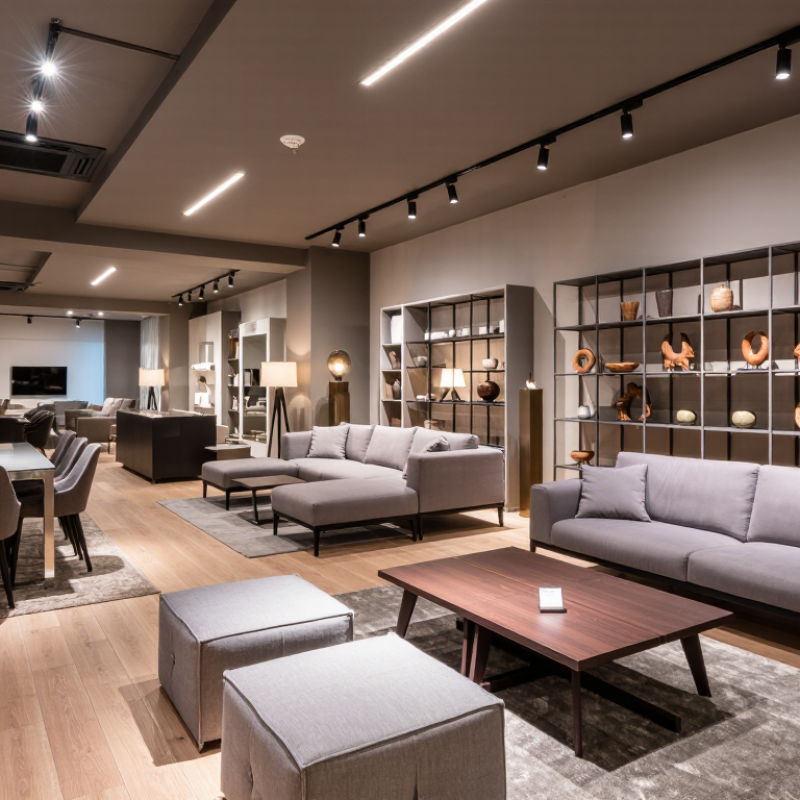
How to Choose Furniture Store Lighting in 2026?
Furniture lighting should begin with customer experience, not fixture selection. Define the mood first: calm in a bedroom display, energetic near office furniture, and warm around dining tables. Customers need to judge texture, finish, scale, and color without squinting. A comfortable visual path matters too. Use brighter light near entrances, then create softer zones around room settings. Keep glare away from polished surfaces and mirrors. Small details change confidence.
The U.S. Department of Energy reports that LED lighting uses at least 75% less energy and lasts up to 25 times longer than incandescent lighting. That supports lower operating costs, but efficiency alone cannot define success. Choose high color-rendering sources, ideally with a CRI of 90 or higher, for wood, fabric, leather, and painted finishes. Color temperature also needs discipline. Around 2700–3000K often suits residential displays, while 3500–4000K can support contemporary office areas.
The International Energy Agency estimates that lighting represents about 15% of global electricity consumption. Your store’s lighting plan therefore affects both experience and environmental performance. Test samples at eye level, beside windows, and under evening conditions. A display that looks perfect at noon may feel flat after sunset. That flaw is useful. It reveals where controls, dimming, or layered lighting are missing. Review customer movement, dwell time, and returned color complaints before making permanent changes. Data helps, but furniture still needs a human eye.
| Store Zone | Primary Lighting Goal | Recommended Illuminance | Recommended Color Temperature | Color Rendering Target | Customer Experience Objective | Key Performance Metric | Priority |
|---|---|---|---|---|---|---|---|
| Storefront and Entrance | Make the entrance visible, welcoming, and easy to navigate from outside. | 300–500 lux on the entry path and display surfaces | 3000–3500 K | CRI 80+; CRI 90+ for prominent upholstered or wood displays | Create a clear transition from the street into a comfortable shopping environment. | Entrance visibility, walk-in traffic, and first-zone dwell time | High |
| Main Circulation Aisles | Provide consistent illumination for safe movement and intuitive wayfinding. | 200–300 lux on the floor and primary walking surfaces | 3000–4000 K | CRI 80+ | Help customers move comfortably without creating a harsh or overly commercial atmosphere. | Aisle visibility, navigation ease, and customer flow | High |
| Living Room Displays | Show furniture scale, texture, color, and coordinated room arrangements. | 300–500 lux ambient; 500–750 lux on feature pieces | 2700–3500 K | CRI 90+; R9 preferably above 50 for warm colors | Make room settings feel relaxing and realistic while allowing close product inspection. | Dwell time, product interaction, and consultation requests | High |
| Bedroom Displays | Support a calm, residential mood while preserving fabric and finish accuracy. | 200–400 lux ambient; 400–600 lux on featured beds and nightstands | 2700–3000 K | CRI 90+ | Encourage customers to imagine comfort, relaxation, and the product in their own home. | Dwell time, fabric inspection, and room-set engagement | High |
| Dining Furniture Area | Emphasize tabletop finishes, chair upholstery, and the social character of the setting. | 300–500 lux ambient; 500–750 lux on tabletops | 2700–3500 K | CRI 90+; strong red rendering is useful for warm wood and textiles | Create an inviting dining atmosphere while making surface details easy to compare. | Tabletop inspection, seating trials, and conversation time | High |
| Sofa and Upholstery Displays | Reveal fabric texture, stitching, color variation, and seating comfort. | 300–500 lux ambient; 500–750 lux for close inspection | 3000–3500 K | CRI 90+; low glare is essential for broad fabric surfaces | Build confidence in material quality and encourage customers to sit, touch, and compare. | Product trials, fabric sample requests, and comparison time | High |
| Mattress and Sleep Comfort Area | Balance accurate product visibility with a quiet, low-stress atmosphere. | 150–300 lux ambient; 300–500 lux for product information | 2700–3000 K | CRI 90+ | Reduce visual stress and support private, comfortable product evaluation. | Trial duration, consultation quality, and customer comfort feedback | Medium |
| Material and Finish Sample Wall | Allow accurate comparison of wood, stone, metal, leather, and textile finishes. | 500–750 lux on sample surfaces | 3500–4000 K | CRI 90+; consistent spectral quality across the wall | Help customers make confident choices without misleading color shifts. | Sample handling, selection time, and color-related returns | High |
| Decorative Accessories | Use accent lighting to create visual interest and support add-on purchases. | 300–500 lux ambient; 750–1000 lux on selected feature objects | 2700–3500 K | CRI 90+ | Add depth and inspiration without competing with the main furniture displays. | Feature-zone attention and accessory attachment rate | Medium |
| Sales Consultation Areas | Provide comfortable light for discussions, paperwork, and digital product comparisons. | 300–500 lux on tables and faces | 3000–3500 K | CRI 80+; CRI 90+ improves material and document clarity | Support trust, focused conversation, and a comfortable decision-making process. | Consultation duration, quote completion, and customer satisfaction | High |
| Checkout and Service Desk | Ensure clear communication, accurate transactions, and easy document reading. | 300–500 lux on the counter and work surface | 3000–4000 K | CRI 80+ | Make the final stage of the visit efficient, professional, and visually comfortable. | Transaction time, queue visibility, and service errors | Medium |
| Back-of-House and Receiving | Support safe handling, accurate inventory checks, and efficient staff movement. | 300–500 lux on work surfaces and loading paths | 3500–4000 K | CRI 80+ | Improve operational visibility without applying unnecessarily bright light to customer areas. | Handling incidents, picking accuracy, and staff task efficiency | Medium |
| Glare and Comfort Control | Prevent discomfort from exposed light sources, reflections, and excessive contrast. | Maintain even background light and controlled accent contrast | Keep color temperature consistent within each visual zone | Use high-quality optics and suitable shielding; avoid visible LED hotspots | Help customers stay longer and view products without squinting or visual fatigue. | Customer complaints, staff feedback, and observed eye discomfort | High |
| Daylight and Energy Management | Use daylight where practical while maintaining stable product appearance throughout the day. | Adjust electric lighting to maintain target levels as daylight changes | Use dimming and scheduling rather than frequent color shifts | Maintain consistent color quality during daylight and evening hours | Deliver a reliable experience while reducing unnecessary electricity consumption. | Lighting energy use, lux stability, and after-hours operating time | High |
| Lighting Controls and Review | Measure whether lighting supports merchandising, comfort, safety, and operational goals. | Review illuminance at least seasonally and after layout changes | Keep programmed scenes aligned with daytime, evening, and event needs | Inspect color consistency, flicker, glare, and maintenance condition | Turn lighting from a one-time installation into an adjustable customer-experience tool. | Sales-zone performance, maintenance frequency, energy intensity, and feedback | High |
It should help customers judge texture, color, finish, and furniture scale comfortably. Create calm bedroom zones, energetic office areas, and warm dining displays. Small details matter.
Use brighter light near entrances and softer light around room settings. Keep aisles evenly lit, including deeper showroom sections. A bright entrance can make distant displays look dull.
Choose lighting with a color rendering score of 90 or higher. It can reveal wood, fabric, leather, and painted finishes more accurately. Colors may still look different at home.
Warm light around 2700–3000K often suits bedrooms and residential displays. Neutral light around 3500–4000K can support contemporary office furniture. Test before deciding.
Aim light at furniture surfaces, not directly toward customers’ eyes. Check polished tables, mirrors, screens, and glossy cabinet doors from several positions. Move the sample three meters.
Inspect displays during morning sun, cloudy afternoons, and evening conditions. Use blinds or adjustable controls when daylight hides wood grain or fabric color. One sample position can mislead.
LED fixtures can use at least 75% less energy than incandescent lighting. They may also last up to 25 times longer. That reduces replacement work above tall displays.
Use occupancy sensors in stockrooms and staff areas. Add daylight dimming near windows and scenes for opening, sales, and cleaning. Controls only help when staff actually use them.
Walk the customer route during busy and quiet hours. Use a floor plan, lux meter, and evening inspection. Review dwell time, movement, and color-related complaints. The numbers help, but human judgment still matters.
Choosing the right Furniture Store Lighting in 2026 begins with defining the shopping experience you want to create. Consider whether your store should feel warm and welcoming, modern and refined, or bright and practical. Review the layout, product categories, display zones, ceiling height, and available daylight to determine where focused, ambient, and accent lighting are needed. Each area should guide customers comfortably while presenting furniture in a natural and attractive way.
Energy efficiency and controllability are also essential. Select durable fixtures with adjustable output, and consider smart controls that support scheduling, dimming, and zoning. Match color temperature and beam angles to each furniture style so materials, textures, and finishes appear accurate without glare. Finally, plan installation access, routine maintenance, energy costs, and future upgrades from the beginning. A flexible lighting strategy can improve product presentation, customer comfort, operational efficiency, and long-term value.