
0%

Lighting is no longer a finishing touch in modern interiors. It shapes comfort, visual balance, energy use, and daily routines. For global buyers, choosing the right Interior Design Lighting requires more than following attractive showroom trends. Regional voltage, installation methods, safety certifications, and replacement support can change a product’s real value.

The 2026 market is expected to feature layered lighting, sculptural pendants, recessed systems, track lights, wall sconces, and adaptable smart controls. Warm LED tones may create a calm bedroom atmosphere, while higher color rendering can reveal accurate finishes in kitchens, galleries, and retail spaces. Details matter. A 2700K lamp feels softer than a 4000K lamp. A high CRI rating can make wood, fabric, and artwork appear more natural. IP protection also matters in bathrooms and covered outdoor areas.

However, no lighting guide can predict every project perfectly. A fashionable fixture may produce glare, cast harsh shadows, or require difficult maintenance. That is easy to overlook. Buyers should compare technical datasheets, warranty terms, dimming compatibility, and independent product testing before ordering internationally. Sustainable materials and efficient LEDs are useful, but they do not automatically guarantee responsible production. Supplier transparency still needs careful review.

This guide explores the leading lighting types for 2026 and explains where each option performs best. It considers aesthetics, installation conditions, lifecycle costs, and user comfort. The goal is practical decision-making, not trend chasing. Good lighting should look impressive, work reliably, and remain suitable after the first photograph fades.
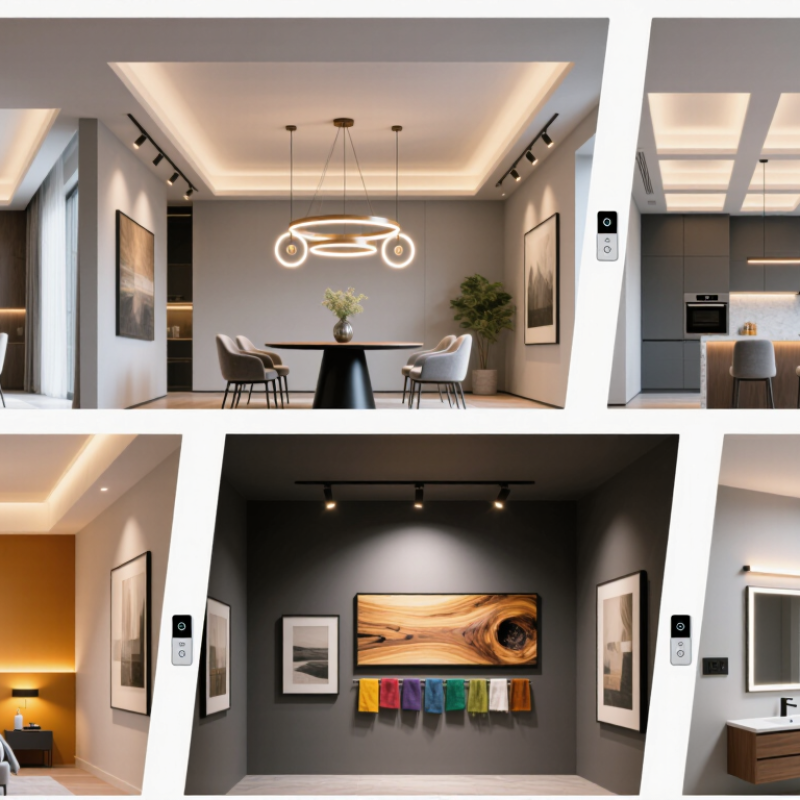
2026 Top Interior Design Lighting Types for Global Buyers

What Defines Interior Design Lighting in 2026

Interior design lighting in 2026 is defined by balance, not brightness alone. In project reviews, I assess how a fitting shapes a room at morning, noon, and night. Light must support work, rest, movement, and mood. Layered schemes combine ambient, task, and accent lighting without creating harsh contrasts. Warm dimming can make a dining area feel calmer, while accurate color rendering protects the appearance of wood, fabric, and food.

Human comfort now matters as much as visual style. Designers examine glare, flicker, shadow quality, and the relationship between electric light and daylight. Small details matter. A concealed strip beneath a shelf can guide movement without dominating the room. Controls should remain simple, with clear scenes and manual options for users who dislike complex systems. Energy performance also influences buying decisions, including efficient light sources, replaceable components, and responsible material choices.

Global buyers need more than attractive product images. They should verify voltage compatibility, photometric data, maintenance access, safety documentation, and applicable local certifications. This approach is not flawless. Sensors can misread activity, and automated scenes may feel cold in real homes. I still see projects where technology receives more attention than the people using it. Good lighting should remain adaptable, repairable, and quiet in its presence. It should serve the room first, even when the latest control system stops working.

Major Lighting Types for Residential and Commercial Interiors

Interior lighting for global buyers is moving toward layered systems, not one fixture type. Ambient lighting establishes overall visibility through recessed downlights, linear profiles, or surface-mounted luminaires. Task lighting adds precision above kitchen counters, desks, reception areas, and production tables. Accent lighting directs attention toward artwork, shelving, textures, or architectural details. Decorative fixtures can shape identity, but they should not carry every lighting function.

The International Energy Agency reports that buildings consume about 30% of global final energy. Efficient lighting therefore matters in homes, offices, hotels, and retail spaces. LED systems, occupancy sensors, daylight controls, and dimming can reduce unnecessary consumption. Commercial interiors often need adaptable track lighting, suspended linear systems, and emergency illumination. Residential projects usually benefit from softer cove lighting, wall sconces, pendants, and adjustable reading lights. The U.S. Department of Energy’s solid-state lighting research identifies controllability and color quality as continuing priorities.

Comfort still requires judgment. A high lumen count does not guarantee a pleasant room. The wrong beam angle can create glare on a polished desk or television screen. I have seen technically compliant layouts feel strangely flat. That is a useful warning. The CIE recommends evaluating illuminance, glare, color appearance, and visual comfort together, rather than selecting products by wattage alone. Buyers should request photometric files, color-rendering data, flicker information, ingress ratings, and maintenance details before approving a specification. Local voltage, ceiling height, climate, and installation skills can quietly change the result.

2026 Top Interior Design Lighting Types for Global Buyers

Major Lighting Types for Residential and Commercial Interiors

The chart compares representative maintained illuminance targets for common interior applications. Ambient lighting supports general visibility, task lighting provides higher illumination for focused activities, accent lighting highlights architectural or merchandise features, and decorative lighting contributes visual atmosphere. Values are expressed in lux and reflect commonly used interior design targets based on EN 12464-1:2021 and professional lighting practice.

How to Match Lighting Types with Interior Spaces

Lighting should follow how a room is used, not only how large it appears. In a living room, layered lighting creates comfort and flexibility. Use a broad ceiling fixture for general brightness. Add wall lights near artwork or seating areas. Floor lamps can support reading without making the entire room harsh. Warm light usually feels more welcoming. Reading corners need focused illumination and controlled glare.

Kitchens require clear task lighting above worktops and islands. Choose fixtures with high color rendering, so food colors remain natural.

In dining areas, a suspended light should sit low enough for intimacy, but high enough to protect sightlines. Bathrooms need moisture-resistant fittings and even facial lighting near mirrors.

Bedrooms benefit from soft bedside lights with reachable switches. Small spaces often need compact ceiling lights and reflective wall illumination.

I once selected a dramatic pendant for a narrow room, and it felt visually heavy. The lesson was useful, but incomplete. Room height, surface color, and user preference also matter.

Global buyers should verify voltage, dimming compatibility, dimensions, heat performance, and applicable safety requirements before ordering.

Ask for technical drawings and tested specifications. A beautiful fitting is not always a practical one.

Key Technical Standards for Global Lighting Buyers

Global lighting buyers are selecting more than decorative forms in 2026. Downlights, linear pendants, wall lights, and recessed systems must satisfy technical rules across different markets. IEC 60598 is a key reference for luminaire safety. Buyers should also check electrical input, insulation, earthing, and thermal performance. A beautiful fitting is not automatically a safe fitting.

Ask for test reports from an accredited laboratory. Verify the exact model, not a similar product. Check voltage, frequency, power factor, and total harmonic distortion. For LED systems, review driver compliance with IEC 61347 and module requirements under IEC 62031. Photobiological safety under IEC 62471 matters in schools, hotels, and healthcare spaces. It helps control uncomfortable glare and potential eye risks. Keep records.

Ingress protection should match the installation location. IEC 60529 ratings guide choices for bathrooms, kitchens, façades, and covered outdoor areas. Confirm electromagnetic compatibility, dimming protocol, emergency operation, and replacement parts before ordering. DALI-2 may suit a controlled building system, while simpler projects may need another solution. Local approval marks, energy rules, and recycling obligations can differ by country. Do not treat one certificate as universal. A specification can look complete and still fail on site. I would recheck color consistency, especially after repeated production batches. That step is easy to miss.

How to Evaluate Suppliers, Costs, and Product Quality

For global buyers, lighting selection begins with supplier evidence, not attractive catalogue images. The International Energy Agency’s Energy Efficiency 2023 report estimates that lighting uses about 15% of global electricity. That makes efficiency a purchasing concern, not merely a design preference. Request test reports for lumen output, colour rendering, flicker, power consumption, and rated lifetime. Ask whether an independent laboratory issued them.

Compare total cost, not only the factory quotation. The U.S. Department of Energy states that LED products can use at least 75% less energy and last up to 25 times longer than incandescent lamps. However, these figures describe suitable LED systems, not every low-cost fixture. Calculate purchase price, freight, installation, replacement parts, electricity, and disposal over five years. Warranty terms need detail. “Five years” is weak if it excludes drivers or applies only to limited operating hours.

Supplier quality becomes visible in small physical details. Examine aluminium thickness, connector security, heat dissipation, driver certification, packaging, and batch consistency. Request a pre-shipment sample and compare it with the approved sample under identical voltage. I have seen attractive finishes hide unstable colour temperatures. That mistake is expensive. Buyers should also verify compliance with applicable electrical and chemical regulations in the destination market. I would not rely on one report alone; testing dates, model numbers, and factory addresses can change. A documented inspection plan, traceable components, and realistic production capacity provide stronger assurance than polished sales language.

2026 Top Interior Design Lighting Types for Global Buyers - How to Evaluate Suppliers, Costs, and Product Quality

Lighting Type Typical Interior Applications Common CCT Target CRI Typical LED Efficacy Rated Life Indicative FOB Cost per Unit Supplier and Quality Evaluation Points Recommended Buyer Documentation
Recessed Downlights Hotels, residences, retail stores, offices, corridors and galleries 2700–4000 K CRI ≥90 80–110 lm/W 40,000–60,000 hours US$4–18 Check beam-angle consistency, glare control, thermal design, driver flicker, cut-out tolerance and compatibility with dimming systems. IES/LDT photometric file, LM-80/TM-21 evidence where available, electrical safety reports, dimming test records and installation drawings.
Track Spotlights Retail displays, museums, restaurants, hospitality interiors and accent lighting 2700–4000 K CRI ≥90 75–105 lm/W 40,000–50,000 hours US$12–45 Evaluate optical precision, 24°–36° beam options, adjustable joints, track-system compatibility, heat dissipation and color consistency. Beam-angle test report, color-bin information, adapter compatibility list, photometric files and mechanical endurance test results.
Linear Pendant Lights Conference rooms, kitchen islands, dining areas, reception desks and open-plan offices 3000–4000 K CRI ≥80; ≥90 for premium projects 90–125 lm/W 50,000 hours US$35–160 Inspect profile straightness, diffuser uniformity, suspension strength, cable adjustment, end-cap fit and acoustic or glare-control options. Load-bearing test, assembly instructions, suspension details, lumen-maintenance data and electrical compatibility statement.
LED Strip and Profile Systems Cabinet lighting, coves, shelving, wardrobes, hospitality details and indirect architectural lighting 2700–4000 K CRI ≥90 70–115 lm/W 30,000–50,000 hours US$3–20 per metre Verify LED density, voltage stability, adhesive performance, aluminum profile heat sinking, IP rating and color consistency across production batches. Voltage-drop table, power-consumption data, binning tolerance, IP test report, profile drawings and compatible power-supply specifications.
Wall Sconces Bedrooms, corridors, bathrooms, restaurants, living rooms and decorative hospitality spaces 2200–3000 K CRI ≥80; ≥90 for residential and hospitality use 60–100 lm/W 30,000–50,000 hours US$18–90 Assess shade material, surface finish, mounting plate strength, junction-box fit, heat management and protection against accidental contact. Material declarations, finish samples, mounting template, electrical test reports and bathroom-use suitability data where applicable.
Decorative Pendants Dining rooms, foyers, hotel lobbies, stairwells, restaurants and feature areas 2200–3000 K CRI ≥80 60–100 lm/W 25,000–50,000 hours US$25–180 Review shade consistency, dimensional accuracy, ceiling-canopy strength, packaging protection, cord quality and replacement-part availability. Material and finish samples, packaging drop-test results, maximum hanging-load data and spare-parts list.
Smart and Tunable-White Fixtures Premium residences, offices, wellness spaces, hotels and circadian-oriented interiors 2200–6500 K CRI ≥90 70–110 lm/W 40,000–60,000 hours US$35–220 Test color-transition smoothness, network stability, control-system interoperability, firmware support, cybersecurity practices and offline operation. Control protocol details, API or gateway documentation, interoperability test results, firmware policy and privacy/security statement.
Surface-Mounted Ceiling Lights Low-ceiling residences, offices, corridors, utility areas and commercial interiors 3000–4000 K CRI ≥80 85–120 lm/W 40,000–60,000 hours US$8–40 Check uniform illumination, driver accessibility, ceiling-mount security, operating temperature, diffuser yellowing and standby power. Photometric test report, mounting instructions, driver specification, thermal test data and product-replacement policy.
Under-Cabinet Task Lights Kitchens, wardrobes, workstations, retail shelving and display cabinets 2700–4000 K CRI ≥90 80–120 lm/W 30,000–50,000 hours US$5–35 Evaluate hotspot control, touch or sensor response, cable routing, heat dissipation, low-voltage safety and ease of field replacement. Installation diagrams, connector pinout, power-supply requirements, switch-cycle test results and sample color measurements.
Decorative Chandeliers Luxury residences, hotel entrances, dining rooms, ballrooms and high-end restaurants 2200–3000 K CRI ≥80 50–95 lm/W 25,000–50,000 hours US$120–1,200+ Prioritize structural engineering, suspension redundancy, electrical load distribution, component traceability, assembly tolerances and export packaging. Structural calculations, installation method statement, component schedule, packing specification, replacement-component list and site-safety documents.
Cost figures are indicative 2026 FOB ranges for standard export configurations and can vary with materials, dimensions, order quantity, certifications, control systems, packaging and customization. Buyers should validate all performance data through pre-production samples, independent testing and project-specific compliance checks.

FAQS

What are the main types of interior lighting?

Ambient lighting provides overall visibility through ceiling, recessed, linear, or surface-mounted fixtures. Task lighting supports precise activities, such as cooking or reading. Accent lighting highlights artwork, shelves, textures, or architectural features. Decorative lighting adds character but should not perform every function.

Why is layered lighting useful in homes and commercial interiors?

Layered lighting combines ambient, task, accent, and decorative sources. It helps one room support several activities. A living room might use ceiling light, wall lights, and a reading lamp. One fixture rarely does everything well.

How should lighting be selected for kitchens and bathrooms?

Kitchens need clear task lighting above counters and islands. Choose strong color rendering for natural-looking food colors. Bathrooms require moisture-resistant fittings and even mirror lighting. Glare near mirrors can become uncomfortable quickly.

What lighting works well in bedrooms and living rooms?

Bedrooms suit soft bedside lights with reachable switches. Living rooms benefit from warm ambient light, wall fixtures, and adjustable floor lamps. Reading areas need focused light with controlled glare. Comfort matters more than maximum brightness.

How can lighting reduce energy consumption?

Efficient LED systems can reduce electricity use and replacement frequency. Occupancy sensors switch lights off in empty rooms. Daylight controls and dimming prevent unnecessary brightness. These systems need correct installation and compatibility checks.

What technical information should buyers request?

Request photometric files, color-rendering data, flicker information, and maintenance details. Check voltage, dimming compatibility, dimensions, heat performance, and ingress ratings. Ask for technical drawings and tested specifications. A catalogue image is not enough.

How should buyers compare lighting costs?

Compare purchase, freight, installation, electricity, repairs, and disposal costs over five years. A low factory price may hide expensive driver replacements. Review warranty exclusions and operating-hour limits carefully. The cheapest fixture may cost more later.

How can buyers evaluate supplier and product quality?

Request independent test reports with dates, model numbers, and factory details. Inspect aluminium thickness, connectors, heat dissipation, packaging, and batch consistency. Compare a pre-shipment sample with the approved sample under identical voltage. Small details matter.

What common lighting mistake should buyers reconsider?

A high lumen count does not guarantee visual comfort. A narrow beam can create glare on a polished desk or television. I once chose a dramatic pendant for a narrow room. It looked attractive but felt visually heavy. Room height and surface color deserved more attention.

Conclusion

This guide to Interior Design Lighting in 2026 explains how modern lighting combines visual comfort, energy efficiency, smart control, and flexible design. It introduces major lighting types for residential and commercial interiors, including ambient, task, accent, decorative, recessed, track, pendant, wall-mounted, and linear systems. Readers will learn how to match each type with spaces such as living rooms, kitchens, offices, retail areas, hospitality venues, and public interiors according to function, ceiling height, layout, atmosphere, and maintenance needs.

For global buyers, the guide also highlights essential technical considerations, including safety certifications, voltage compatibility, color temperature, color rendering, ingress protection, dimming performance, energy efficiency, material durability, and installation requirements. It concludes with practical advice on evaluating suppliers, comparing total costs, checking product consistency, reviewing samples, confirming documentation, and assessing after-sales support. Together, these insights help buyers select reliable, efficient, and visually appropriate lighting solutions for diverse interior projects.

Eldric

Eldric

Eldric is a professional marketing specialist dedicated to helping customers better understand the value, quality, and practical applications of our products. With a strong background in market research, content strategy, and customer communication, he regularly contributes expert articles to our......