
Choosing the right Commercial Decorative Lighting supplier involves more than comparing attractive product photos. A successful specification must balance visual appeal, technical performance, safety, delivery reliability, and long-term service. This guide examines ten notable suppliers through practical criteria used by designers, contractors, hospitality teams, and commercial buyers.
The review considers fixture quality, material consistency, light output, color rendering, color temperature, dimming compatibility, and available certifications. It also examines customization options, sample policies, production capacity, packaging, lead times, warranty terms, and after-sales communication. Small details matter. A brushed brass finish should remain consistent across a large installation. A pendant should arrive protected, labeled, and ready for efficient site assembly.
Evidence is drawn from supplier information, product documentation, market reputation, and real-world purchasing considerations. However, no ranking can suit every project. A boutique hotel may prioritize handmade glass, while an office developer may need standardized stock and predictable delivery. Preferences also change, and supplier information can become outdated. That limitation deserves attention.
This selection is designed as a practical starting point, not an absolute verdict. Readers should request current quotations, technical sheets, samples, and compliance documents before placing orders. Careful verification can prevent costly surprises, especially when lighting affects guest comfort, maintenance access, energy use, and the character of an entire commercial space.
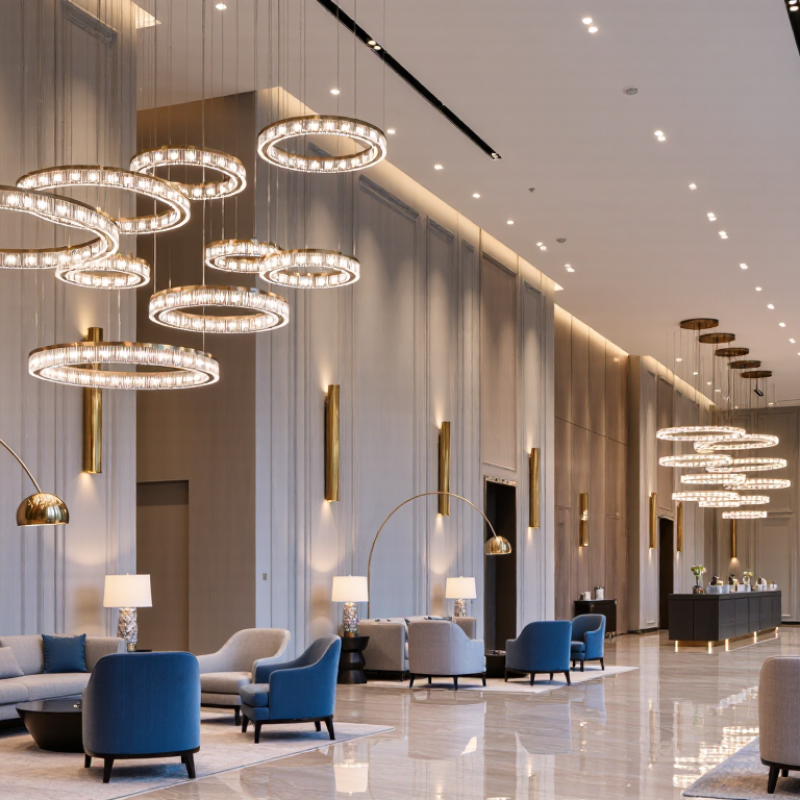
A commercial decorative lighting supplier is defined by more than attractive fixtures. It combines design judgment, technical knowledge, and dependable project support. In real projects, appearance matters, but performance decides whether a lobby feels comfortable at 8 a.m. An experienced supplier studies ceiling heights, viewing angles, maintenance access, and the color of nearby materials. Small details matter.
A reliable supplier provides clear photometric data, material samples, installation drawings, and realistic lead times. It should explain light output, glare control, color consistency, dimming options, and energy performance in plain language. It also understands applicable electrical and building requirements, then coordinates with designers, contractors, and facility teams. Good documentation reduces expensive changes after ceilings are closed. That is practical expertise.
Trust is tested when a shipment is delayed or a finish differs slightly from the approved sample. A credible supplier responds quickly, records decisions, and offers a workable remedy instead of hiding behind paperwork. References from comparable hospitality, retail, or workplace projects can reveal service quality better than polished claims. Still, no supplier gets every detail right. I would ask how defects are handled, who supports commissioning, and what happens after installation. Those answers often define the supplier more clearly than a beautiful catalog.
This 100-point procurement framework highlights the main factors used to evaluate commercial decorative lighting suppliers. Compliance and safety, optical performance, and durability receive the highest weighting because commercial projects require reliable operation, consistent light quality, and long service life. Customization, delivery reliability, and after-sales support help determine whether a supplier can meet project-specific requirements.
Choosing among the 10 best commercial decorative lighting suppliers requires more than attractive product photos. Design should match the project’s architecture, viewing distance, and maintenance plan. Ask for scaled drawings, photometric files, finish samples, and mock-ups. A beautiful pendant can feel oversized in a quiet hotel lobby. I have seen this mistake survive several review meetings.
Quality needs measurable evidence. The International Energy Agency reports that lighting uses about 15% of global electricity consumption. Efficient sources therefore affect operating costs, not only appearance. Request lumen output, color-rendering data, rated life, driver details, and thermal test results. The U.S. Department of Energy’s solid-state lighting reports emphasize efficacy, controls, and reliability as key performance factors. Do not accept “premium quality” without test documentation. It is vague.
Tips: Score every supplier across design, quality, and service. Use a simple 1–5 matrix. Check whether quoted light levels match real room conditions. Confirm replacement parts, warranty response times, installation guidance, and packaging standards. Ask for two recent commercial references, then call them. Service claims can sound polished. Actual response records matter more. One weakness remains: supplier data may use ideal laboratory conditions. Recheck critical samples on site before approving a large order.
Commercial decorative lighting suppliers are now judged by more than attractive catalogs. The ten leading suppliers typically include specialists in hospitality, retail, architectural, outdoor, retrofit, smart controls, custom fabrication, low-glare optics, rapid delivery, and project management. Their strongest advantage is practical experience. They can provide photometric files, finish samples, fire-safety documents, installation drawings, and clear warranty terms. A supplier can look impressive on paper and still miss a project deadline.
Energy performance also deserves careful attention. The International Energy Agency reports that lighting consumes about 15% of global electricity. The U.S. Department of Energy states that LED products can use at least 75% less energy and last up to 25 times longer than incandescent lamps. These figures support LED selection, but decorative fixtures still need proper heat management, color consistency, and dimming compatibility.
A beautiful pendant with visible glare may fail in a hotel lobby. Fit matters. I would not treat every efficiency claim as equally reliable; request test methods and certified performance data.
Tips:
Compare ten suppliers using the same checklist. Ask for lumen output, color-rendering data, control protocols, lead times, replacement parts, and installation support.
Test one sample beside the actual wall finish. Details matter. Check light at eye level, not only in product photographs.
Review maintenance access before approving custom forms. A fixture that requires a lift for every lamp change may create higher operating costs, despite its strong visual impact.
Commercial decorative lighting suppliers now serve more than visual appeal. Their product categories include pendant lights, wall sconces, linear systems, recessed fixtures, and outdoor architectural units. According to the International Energy Agency, lighting represents roughly 15% of global electricity consumption. Therefore, efficient decorative products matter in both design and operating budgets.
Hospitality projects often use warm pendants above reception desks and dimmable wall fixtures along corridors.
Retail spaces need high color rendering, usually CRI 90 or higher, for clothing, food, and displays.
Offices typically require low-glare linear lighting with compatible control systems.
Healthcare facilities demand easier cleaning, stable color, and reliable emergency operation.
Outdoor applications add IP ratings, corrosion resistance, and precise beam control.
Small details matter.
The U.S. Department of Energy’s Solid-State Lighting reports show that laboratory LED efficacy can exceed 200 lumens per watt, although real installations perform lower. This gap deserves attention.
A supplier should provide tested photometric files, lifetime data, warranty terms, color-consistency information, and control compatibility.
I have seen attractive fixtures fail because drivers overheated above busy dining areas. That was avoidable.
A lower-cost fitting may also create higher maintenance expenses.
Supplier evaluation should compare delivered illumination, not only catalog appearance or unit price.
Some specifications remain unclear, and buyers should question unsupported claims before approving samples.
Selecting among the 10 best commercial decorative lighting suppliers requires more than attractive product photos. Start with the project’s operating needs. Check beam angle, color temperature, CRI, dimming compatibility, IP rating, and expected operating hours. A supplier should provide current photometric files and clear installation instructions. Ask for physical samples. A warm brass finish can look elegant online but appear too yellow under showroom lighting.
Review the supplier’s project experience, production controls, and technical support. Request references from hotels, restaurants, offices, or retail spaces similar to yours. Confirm lead times, minimum order quantities, replacement procedures, and warranty terms in writing. Reliable suppliers explain tolerances instead of hiding them. They should also identify who handles technical questions after delivery. That detail matters during installation.
Price deserves attention, but it should not control the decision alone. Compare total cost, including shipping, spare components, control gear, installation complexity, and future maintenance. Request a sample room mock-up when the lighting affects customer comfort or product presentation. I once underestimated the value of glare testing. The fixtures looked impressive, yet reflections appeared on polished tables. No checklist is perfect. Visit the production site if practical, inspect packaging, and ask how damaged units are documented. A supplier that welcomes difficult questions usually offers stronger project reliability.
It combines design judgment, technical knowledge, and reliable project support. Appearance matters, but performance shapes comfort during daily use. Small details matter.
The supplier should study ceiling heights, viewing angles, maintenance access, and nearby material colors. A fixture may look elegant but feel oversized in a quiet lobby.
Request photometric data, material samples, installation drawings, and realistic lead times. Also ask for mock-ups and scaled drawings before approving production.
Ask for lumen output, color-rendering data, rated life, driver details, and thermal test results. Do not accept “premium quality” without evidence. It is vague.
Efficient lighting can reduce operating costs because lighting uses substantial electricity worldwide. Review dimming options, control compatibility, light output, and expected operating conditions.
Score design, quality, and service with a simple 1–5 matrix. Check whether quoted light levels match the actual room, not only laboratory conditions.
Contact two recent commercial references and ask about delays, defects, installation guidance, and warranty responses. Polished claims are not enough. Response records matter more.
The supplier should record the difference, explain its impact, and offer a workable remedy. I might still underestimate small finish changes until fixtures arrive onsite.
Confirm who supports commissioning, replacement parts, and troubleshooting after installation. Good documentation prevents expensive changes after ceilings are closed. Mistakes still happen.
Choosing the right Commercial Decorative Lighting supplier is essential for creating attractive, functional, and reliable spaces in hotels, restaurants, offices, retail stores, and public venues. A strong supplier should offer a balanced combination of creative design, dependable product quality, customization options, safety compliance, efficient production, and responsive customer service. Evaluating materials, lighting performance, durability, lead times, technical support, and project experience can help buyers identify suppliers that consistently meet commercial requirements.
This guide presents ten leading types of suppliers in the commercial lighting market without focusing on specific brands. It also reviews key product categories, including pendant lights, chandeliers, wall fixtures, architectural lighting, and outdoor decorative solutions, along with their common industry applications. By comparing design capabilities, manufacturing standards, customization services, pricing, warranties, and after-sales support, project owners and designers can select a suitable partner that aligns with their visual concept, budget, installation needs, and long-term maintenance goals.